By J. Palmer
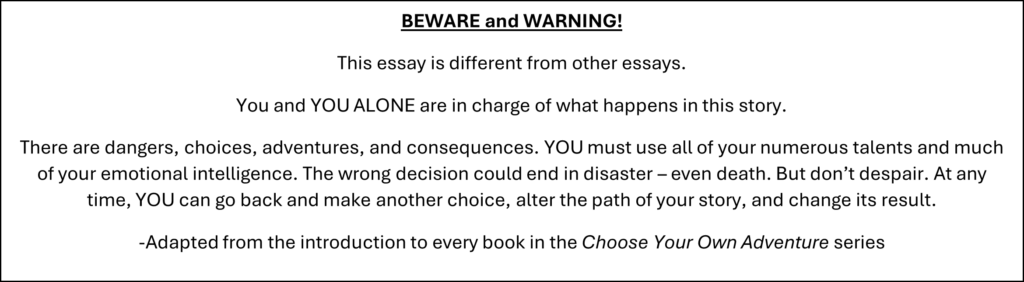
The summer camp that is supposed to be like college is almost over. You wanted a camp with arts and crafts and archery, not one with algebra and English composition. You’ll go to the YMCA sleepaway camp that you’ve gone to since you were six for the second half of the summer. For now, you are 1,000 miles from your home in Illinois, attending a “summer enrichment” program on a college campus in the suburbs of Boston. It’s the summer of 1992. The other kids at the camp are going into their senior year of high school. You just finished 8th grade. The other kids are allowed off-campus. You are not. Your parents wouldn’t sign the permission slip because you are so young.
It is a sticky July day, and you’re sitting at the picnic table in front of your dormitory. Pretend College means you have a lot of down time. You smoke Marlboro Reds and write in your journal. You are a hippie kid, with hints of grunge, new wave, and post-punk. Your daily outfit is a Grateful Dead shirt – or another band – and a flannel with jeans, no matter the weather. You don’t want people to know you cut your arms when you need to feel. The other kids look like they walked out of a Gap Ad. They don’t have much to say to you, the sad hippie from the Midwest. A nerdy guy, a student at a nearby university, who works as a computer science day camp counselor in the building next door to yours, doesn’t ignore you like they do.
You’re 13 and he’s 20.
He sits with you often while you smoke and write in your journal and says annoying things like “Penny for your thoughts?” You usually ignore him but today you have a story to tell. You tell him that the night before, the Gap Ad Kids dressed you up and snuck you off campus. You wanted to drink, and they said they knew of a bar that wouldn’t card. They picked out your outfit: a leotard tank top with snaps like a baby’s onesie, too-tight Guess jeans, and high-heeled shoes that gave you blisters and made your calves ache. They used lots of hairspray so your hair looked more like theirs. They put makeup on you and inserted rolled-up socks into your bra to make your tiny boobs look bigger. You played dress up with them like a good little sister. When you got to the bar, the bartender kicked you out and you went back to the dorm alone on the T, the balled-up socks in one hand and the heels in the other.
“You went off campus?” College Guy asks, his eyes lighting up with excitement. “Hey, I have a car. Should I sneak you off campus tonight? It’s your last night in Boston! I’ll take you to dinner at my favorite restaurant.” You blow smoke in his face. “Will there be booze?” you ask, and he says, “Yes.”
If you decide to go to dinner with College Guy, turn to page A.
If you decline and go back to your dorm room instead, turn to page B.
You Selected A:
You say, “Yeah, ok, cool.” College Guy takes you to dinner. He doesn’t let you drink. After you leave the restaurant, you think you are going back to your dorm. He drives to his university instead. He rapes you in three different locations over several hours. Interruptions mean he moves you to more deserted places. First, the flashlight of a campus security guard appeared in the dorm window. Then, in the parking lot, headlights from another car came through the window. He drove farther away and found a field where no lights could stop him. He knows it’s statutory rape. Before entering his dorm, he said, “I know I shouldn’t do this. You’re so young.” You are in a field, and he is on top of you, and he is inside you, and you don’t think you’ll be getting on the plane to go home the next day. Or returning to the dorm. You will die in this field.
You wake up in your dorm room bed the next morning. You don’t remember how you got there. You remember the field. The car. The vacant room at that other university. You remember him inside of you. You turn over and your whole body is sore. Your roommate is asleep. Your friend knocks on the door. She says, “Wake up, sleepy head! Let’s go to the cafeteria! I’m starving!”
If you tell your friend what happened, turn to page C.
If you pretend nothing happened, turn to page D.
You Selected B:
You tell College Guy that you need to pack and you decline his dinner offer. You return to your dorm room, relieved your roommate isn’t there. You put your headphones on and hear the whirr of your Discman start until Jerry Garcia’s voice fills your ears: “Well the first days are the hardest days, don’t you worry any more…” The next day, you fly home to be a camp counselor and archery instructor at the YMCA camp. A month later, you start high school and join the literary magazine. You get into a good college and have a happy life.
The End.
You Selected C:
You tell your friend what happened. You cry. She holds you. She gets the RA, a college student. The RA calls the police. The police take your report. The police are kind and compassionate. They tell you they believe you and that you didn’t deserve this. They send you to the hospital for a rape kit. When you get back from the hospital, you see them arrest him. They put him in the back of their car as your airport shuttle arrives to take you to Logan Airport. You tell your parents what happened when they pick you up at O’Hare. Your parents fly back with you during your freshman year so you can testify. He’s imprisoned for statutory rape and kidnapping. He will be gone for a very long time. You get into a good college and have a happy life.
The End.
You Selected D:
You change quickly into clean clothes and notice blood in your underwear. You grab a pad even though it’s not time for your period. You have breakfast with your friend. You talk about bands. You talk, again, about how much you hate Pearl Jam and why Nirvana’s Nevermind is the best album ever made. You discuss whether REM sold out with Out of Time or if people just finally came to their senses and liked them now. She helps you pack and carries your suitcases. You shower and stuff your bloody underwear in the bottom of a bag when she’s not looking. She stays with you while you wait for the airport shuttle. “What’s he doing here?” she asks when College Guy shows up to see you leave. “I don’t know. What a loser,” you say, under your breath. You look back as you enter the shuttle, and his stare gives you chills. Your parents pick you up from O’Hare. When you get home, you put your clothes into the laundry so you can pack again for the YMCA camp that starts the next day. You hope the stain remover will work on the blood. Your mom tells you dinner is ready.
If you tell your parents what happened, turn to page E.
If you wait two years before you tell anyone what happened, turn to page F.
You Selected E:
You sit down for spaghetti, your favorite. Your older brother is out with friends, so it’s just you and your parents. Your cat rubs up against your leg. You say, “Mom, Dad, I was raped in Boston. By a guy who is in college.” You cry. Your parents console you. They are kind and compassionate. They tell you they believe you and that you didn’t deserve this. They call the police. The police take your report. They find him and arrest him. Your parents fly back with you during your freshman year to testify. He’s put in prison for statutory rape and kidnapping. He will be gone for a very long time. You get into a good college and have a happy life.
The End.
You Selected F:
You are 15 now, a sophomore at your suburban Chicago high school. You hang out with the burnouts. You have switched from Marlboro Reds to Camels. Mostly because you think the hidden picture of a naked guy holding his penis is funny. You smoke weed, drink alcohol and Robitussin, and when your boyfriend from 8th grade, who is now a drug dealer, has them, you take tabs of acid. You still cut yourself and have a suicide pact with your best friend. You start going to Rocky Horror Picture Show midnight shows in the city and use a marker to write LOVE and HATE on your knuckles like Meatloaf’s tattoos in the film. Your math teacher sees HATE on your right hand but not LOVE on your left and tells you she’s worried about you. She tells you she’s available if you want to talk. You find her later that day and the dam bursts. You tell her that you are sometimes transported to that night and it feels like it’s happening again, you tell her that you have nightmares that you are naked in the field or walking along a highway in the dark and you can’t find anyone to help you, you tell her that you fear seeing him when you’re in a crowd, you tell her you can feel him on top of you, inside you, sometimes. She tells you to tell your parents. She tells you she is a rape survivor and that you’re going to be ok. After school that same day, you tell your friend and her mom. Her mom tells you that she is a rape survivor and encourages you to consider telling the police. You didn’t know it was a crime. You didn’t know that so many grown-ups also experienced what you experienced.
You tell your parents with a knot in your stomach. You tell them you want to report to the police. They look at each other, dubious. The summer you were eleven, you lied about being raped, and they don’t believe you are telling the truth now. You were 1,000 miles away from home at a different “summer enrichment” program, and you wanted to come home, so you told the biggest lie you could think of so they would come and get you. Lies were the only way to get their attention.
“I promise, it really did happen. This time.” They sigh. They remind you that College Guy sent them a letter after you got back, asking them to be kinder to you. You remember he sent you a letter at the YMCA camp telling you that “you will learn someday that sex with guys is supposed to be give and take, not just what you did: take.” You never gave him your address. They convince you not to report. They say if you did, you’d have to see him again. They say it’s too complicated to fly back to Boston from Illinois for court dates. You agree. You don’t want to see him again. You agreed to go to dinner with him that night, anyway. You didn’t stop him from assaulting you. Everyone will think it was your fault. Everyone will think you’re a liar.
Your English teacher invites you to join a club she created. It’s a theater troupe where kids perform skits about their experiences with prejudice and racism. She knows you like acting since you tried out for The Sound of Music freshman year. She cast you in the two non-singing parts because you are tone deaf. She also probably suspects you’re queer. Especially since you recently cut your hair off, dyed it blue, and started wearing combat boots.
If you agree to join the theater troupe, turn to page G.
If you keep hanging out with your druggie friends, turn to page H.
You Selected G:
You join the club at the end of sophomore year. You start to hang out with the artists, the theater kids, the punks, and the poets, many of whom are straight-edge. You join the literary magazine and the poetry club. You get a job taking care of an elderly woman after school. You extract yourself from the burnouts by staying busy with work and after-school clubs. You spend your summer trying to get sober as a camp counselor at the YMCA camp. After your ex-boyfriend, the drug dealer, arrives for a two-week session, you get fired for getting high in the middle of the night during a meteor shower while your campers are sleeping. When you get home, you are grounded for a very long time.
Your older brother convinces you that getting into college is the only way out of your hometown. You start hanging out with a group of older feminist girls who call themselves the Bitter Battle Maidens. You show up to school one day wearing FREE LORENA BOBBITT on sandwich boards. You are now sober. You raise your grades. You apply to schools. You become an activist and you write about your personal transformation in your college essay. You get into several schools, including the University of Illinois – Champaign/Urbana and a long-shot elite women’s college called Smith.
If you decide to go to the University of Illinois, turn to page H.
If you decide to go to Smith College, turn to page I.
You Selected H:
You keep doing drugs. You start at the University of Illinois but do not finish. You meet a girl and move back to the suburbs to move in with your ex-boyfriend, the dealer. He lets you and your girlfriend stay with him as long as you do his deliveries to his customers. Your parents try to get you to get help. You change your phone number and never see them again.
The End.
You Selected I:
When you’re at Smith, you and a local Psychiatrist start the Camp Safety Project. You lobby the Massachusetts General Assembly to change camp-related laws, and they do. You share your story on the news. You collect over 100 stories of camp abuse. You stay sober until the summer after junior year of college. The night before a big deal news interview, you are drinking a Corona and smoking a Marlboro Light when you call your parents to tell them that you will be on TV talking about the rape. They tell you not to go on TV. They tell you it would break your grandmother’s heart if you do. You go on TV anyway. Your grandmother never finds out.
You graduate. You move to Chicago. You become a social worker and advocate for child and adult victims of violence. You get a master’s degree in social work. You move to St. Louis and get a job where you run a non-violence education program for domestic violence offenders. You periodically check the sex offender registry for College Guy. You check the statewide registries for every state from Massachusetts to Virginia. You also check Illinois and Missouri, just in case. You can’t find him. You wonder if you should have reported him. You wonder if he’s reoffended. You know from your studies that it is likely he has.
If you decide to keep searching for him, turn to page J.
If you decide to forget about him and move on with your life, turn to page K.
You Selected J:
You move to Washington, D.C., for a doctoral program. You remember College Guy is from a DC suburb. You start having recurring nightmares that you are on a crowded metro train and there he is, staring at you, walking briskly toward you, and you have nowhere to go. You are trapped. You remember he was a computer science major and you begin to worry he is tracking you, that he knows where you are, and is watching you. You know he tracked down your address before and could do it again. You double check that all your social media is private. And you Google yourself to make sure he can’t find you. You have to find out where he is. The sex offender registry is finally a national database. But you still can’t find him there, so you open a private browser and type his name into Google. You learned a lot about him while he sat next to you at that picnic table. You remember his name, where he went to college, and his hometown. His name is not unique, and his first name could be male or female, so each time you click a link you hold your breath.
You open a LinkedIn profile. There he is. Almost two decades after the night he raped you. You feel sick to your stomach as you scan his profile. He was a high school teacher for many years. He is now a doctoral student.
If you decide to contact him, turn to page L.
If you decide to report him to the police, turn to page M.
You Selected K:
You vow to never search for him again. You focus on your healing. You go to therapy. You work with survivors. You advocate for better laws. You get your Ph.D. and become a professor. You marry a kind woman and have a happy life.
The End.
You Selected L:
You send a connection request on LinkedIn. He never responds to it. You focus on you. You go to therapy. You work with survivors. You advocate for better laws. You get your Ph.D. and become a professor. You marry a kind woman and have a happy life.
The End.
You Selected M:
You decide this is the moment. You should press charges. You finally found him. You open a new tab and type “statute of limitations Massachusetts rape” into Google.
The statute of limitations is 15 years for rape, rape of a child under age 16, rape of a child, assault with the intent to commit rape, and assault of a child under age 16 with intent to commit rape.
It has been more than 15 years. You keep reading…
In cases where the victim was under age 16, the statute of limitations will not begin to run until the victim reaches age 16 or the violation is reported to a law enforcement agency, whichever occurs earlier. This statute of limitations also applies to allegations of conspiracy and accessory to the above crimes (Mass. Gen. Laws Ann. Ch. 277 § 63).
You do the math. The statute of limitations runs out 15 years after you turn 16, or your 31st birthday, which you celebrated the day before.
If you decide to forget about him and move on with your life, turn to page K.
If you decide to keep letting it bother you that you never reported him, turn to page O.
You Selected O:
You are a doctoral student studying legal and policy responses to gender-based violence in the U.S. You read all the social science literature you can find. You learn that despite extensive legal reforms, sexual assault and intimate partner violence are pervasive, and many victims still don’t report. If they do, they aren’t believed. Even if they are believed, offenders are usually not convicted. Offenders reoffend and are not held accountable. Justice in the form of a conviction is rare, even after decades of efforts by activists, legal scholars, and policymakers. And prison is not a place to unlearn violence.
Despite what you now know, you feel guilty that you never reported him. His LinkedIn profile picture haunts you. You regret that your silence means he can go on with his life as if it never happened, while you struggle with nightmares, flashbacks, intimacy, and an inability to feel safe. You can’t sit with your back to a door. You avoid elevators. You won’t take a taxi alone. You have chronic pain. He is a student at a fancy university.
You repeat the steps you took two and a half years earlier. You open a private browser and Google his name along with other details you know about him. You find the memory of his LinkedIn profile. It hasn’t been updated. You wonder if he completed his degree and made his way back to the DC area. You find his blog, which also hasn’t been updated recently. You find his Amazon wish list. You didn’t want to know he needed a new Tupperware set. You text your friend who is a student at the same fancy university and ask if he can look him up. Your friend can’t find him in the email directory.
You start to fantasize that maybe these pages aren’t updated because he is in prison for harming another child. But as you go deeper in the search results, you find a Democratic campaign contribution with his name and a woman’s name. You add her name to your search. Then, you find it: publicly available information about real estate sales. He and this woman had recently bought a house, and you are staring at an address in a seaside town in Connecticut. You write the address on a Post-it note.
If you decide to contact him, turn to page L.
If you decide to mail him a dead cat as your close friend advised, turn to page P.
If you decide to rip up the Post-it where you wrote down his information, turn to page Q.
You Selected P:
You don’t send him a dead cat. You like cats too much. You focus on your healing. You go to therapy. You work with survivors. You advocate for better laws. You get your Ph.D. and become a professor. You marry a kind woman and have a happy life.
The End.
You Selected Q:
You rip up the Post-it note. You delete your search history. You tell your wife you’re done. You won’t look for him again. She is relieved.
Five years later, you are back in Boston. You are a professor with a research grant with a non-profit law firm that provides free legal services to sexual assault victims in Massachusetts. Over lunch, you and the executive director are discussing how the allegations against Bill Cosby have inspired several states to consider changing their statutes of limitations. You ask whether Massachusetts is considering changing theirs. She tells you the statute has already changed.
You look up the new statute on your phone.
Mass. Gen. Laws ch. 277, § 63
● Rape or abuse of a child under 16 None*
● Rape 15 years
● Other sexual offenses 6 years
*Any indictment or complaint found and filed more than 27 years after the date of commission of such offense must be supported by independent evidence that corroborates the victim’s allegation.
The rape happened in 1992, and it is now 2016. It has been 24 years. You have three more years until you need “independent evidence.” There were no witnesses. No hospital visits. No police report. You did not tell anyone until 1994. Real life isn’t Law & Order: Special Victims Unit.
The week after you return home from Boston, you are awake at 3 am with a private browser open on your phone. Your wife is sleeping next to you in bed. You type in his name. You find him much quicker this time. He has his own website for his consulting business. You see his headshot staring at you. It’s the same one from his LinkedIn profile. The eyes from your nightmares are on your phone’s screen. You open his CV and notice that he attends the same academic conference every year. You open a new browser and search for the conference. It will take place at a D.C. hotel next month. You enter his name in the presenter search box. He presents at 3:45 pm on Friday, April 8th. Two weeks from now.
You fantasize about sending a cop to arrest him – should the arrest happen before or after his presentation? No, during! Definitely during. You fantasize about sending your friend, who wants to be a CIA agent, to spy on him. You fantasize about attending his presentation to see if he recognizes you. You fantasize about sending a scathing letter to the hotel for an employee to deliver.
You don’t go to the conference. You let the statute of limitations expire. Your studies have taught you that the legal system is designed to protect defendants’ rights, not to support victims. The legal system does not have the capacity to make you feel safer, help you heal, or truly hold him accountable. You know justice is hypothetical. You know what you need, and it is not hanging on to this fantasy that you will become whole again by pursuing charges.
Besides, you are focusing on your healing. You are going to therapy. You are working with survivors. You are advocating for better laws. You have your Ph.D. and are a professor. You are married to a kind woman and have a happy life.
The End.
~~~

J. Palmer’s poems and creative non-fiction focus on themes such as resilience, resistance, healing, grief, loss, and queer joy.