reprinted with permission from www.workinprogressinprogress.com
We don’t expect an elevator pitch from a poet, but can you tell us about your work in 2-3 sentences?
Echoes Carry is a collection throughout which familial and ancestral echoes weave through each poem in subtle and stark ways. It raises the question of how much we are influenced by our families and friends, including ancestors or distant relatives we’ve never met face-to-face. Tangentially, it seeks to understand the connections humans have with one another.
What boundaries did you break in the writing of this book? Where does that sort of courage come from?
I wouldn’t say I’ve broken any boundaries per se, but I wanted to create a collection that could speak to readers, not just academic readers. I wanted my audience to see the possibilities in their own lives and the connections they may have to family, friends, ancestors, without really knowing that their influence has been present since the beginning. It’s something I’ve thought a lot about. The human condition and where we get the impulse to choose one action or feeling over another and how much of that can be nature and how much can be nurtured. Even things that seem unique to us, like writing poems, can be something that our ancestors did before us, and we may never know. The possibilities are endless.
Tell us a bit about the highs and lows of your book’s road to publication.
The high is seeing a print copy in a box that you open at your house with your child videotaping the unboxing. Yes, I did this social media craze. Why? Because I want to share that joy, if not with the internet world, at least with my child. Definitely a fun moment: videotaping goofy mom. The lows are the length of time between when you’ve finally got the manuscript where you want it and you send it out over and over and over ad nauseum to places that reject it. You have to put your energy into another creative project or that process will depress you.
What’s your favorite piece of writing advice?
I think Billy Collins once said, “Write the poem only you can write.” That’s probably the best advice you can have with regard to poetry. But I’ve also taken Stephen King’s advice to heart about manuscripts. In On Writing, he mentioned that manuscripts should have a period of rest in a drawer. I believe he says six weeks, but sometimes, my poetry manuscripts have needed far longer than six weeks.
My favorite writing advice is “write until something surprises you.” What surprised you in the writing of this book?
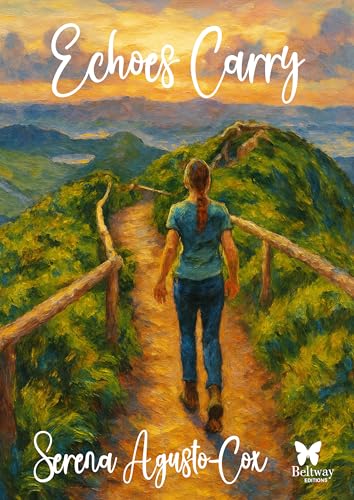
It wasn’t the writing that surprised me or the collection of poems or the ordering of poems. What surprised me was the fun I had creating a book cover on Canva. Yes, I had help with the design, but the vision is all mine. I loved that creative part of the process. It was unexpected. Thinking about all the possibilities suggested by others and by the publisher, but knowing what I wanted to see and then being able to create it was the biggest surprise.
How did you find the title of your book?
The title of the book is a modification of a line in one of the poems. I’ll leave that mystery for readers to uncover.