All posts by Leslie Pietrzyk

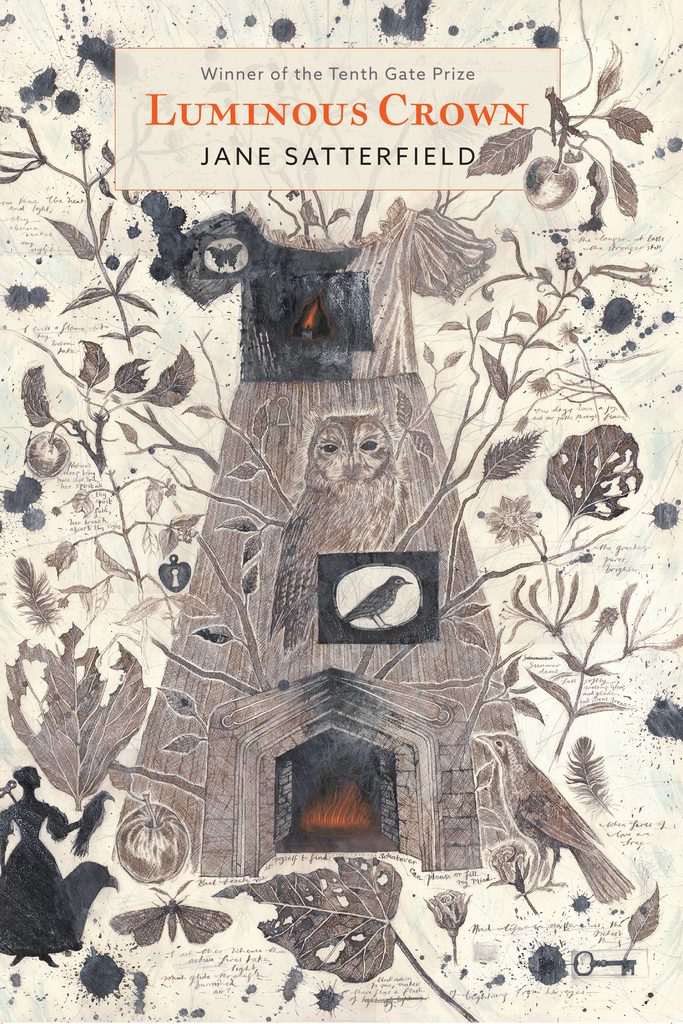
Interview with Jane Satterfield

reposted with permission from www.workinprogressinprogress.com


We don’t expect an elevator pitch from a poet, but can you tell us about your work in 2-3 sentences?

You’re right: poetry collections tend to weave many threads together, but I’ll give it a shot! At its core, Luminous Crown is a direct response to the climate crisis and a lyric chronicle of its effects on the human and natural world. The book moves through poems of elegy for species facing extinction or habitat loss to poems of encounter with creatures real or cryptid who populate our local landscapes and appear in art, folklore, or legend, to poems of enchantment that seek healing or renewal. Ultimately, the book celebrates the wonders of our living world and, I hope, asks readers to consider all that’s at stake for the future.

Which poem/s did you most enjoy writing? Why? And which poem/s gave you the most trouble, and why?

Hands down, the most enjoyable poems were those reflecting on animal observation or surprise encounters, like “Fox” which pays tribute to the scrappy urban interlopers, or the more speculative “Joining the Crows” where the poem’s narrator recalls her misguided attempts to become one of “nature’s real clean-up crew.”

It’s important to me to honor the animal other—not just to use them as metaphors or emblems of emotion. Developing a stronger scientific underpinning meant reading lot, particularly nonfiction about the natural world, the lives of birds, mycorrhizal networks, insect emergence, and so on, which I loved. But the price of deepening ecological awareness is coming face-to-face with a host of human-generated harms and frightening predictions. This was the case with a poem like “Dragonfly or Drone?” which braids together facts and folklore about dragonflies with info from experiments on their potential use for package deliveries, military surveillance, and more. Most poems required a lot of rewriting to create a balance in terms of tone—it’s all too easy to tip into preachiness, sentimentality, or doomerism when facing down dark subjects.

Tell us a bit about the highs and lows of your book’s road to publication.

This book was built on the environmental and social justice aspects of my last collection, The Badass Brontës. The connections between our historical eras seemed less distant than I once would have imagined; Emily, Charlotte, and Anne’s love of animals was such an inspiration, and the backdrop of botanizing in their novels inspired poems about my own ecotone. It took me a while to figure out I was writing two separate books. I had my share of rejections and also good fortune placing individual poems in journals I admire. It was still a was a delightful surprise that this book—unlike any of my others—found a home on its first round of submission flights. Truly, you just never know!

What’s your favorite piece of writing advice?

I love Susan Orlean’s advice about the importance of being curious. It’s the winding trail that leads you to explore other work and is a return path to your own projects, formed and as yet unimagined.

My favorite writing advice is “write until something surprises you.” What surprised you in the writing of this book?

I’ve enjoyed the challenges of writing ekphrastic poems; works like Kiki Smith’s sculpture, Selkie, or Brueghel’s Big Fish Eat Little Fish opened doors into memory and added a powerful dimension to the collection. Kim Krans’ Wild Unknown Tarot was a new discovery and cool source of uncanny inspiration.

How did you find the title of your book?

The title and title poem found me in the form of stand of trees outside my studio and a firefly rinsed out from my hair the morning after a night walk with my spouse during our residency at VCCA: once I was luminous!

Interview with Erin Miller Reid

reprinted with permission from www.workinprogressinprogress.com

Give us your elevator pitch: what’s your book about in 2-3 sentences?

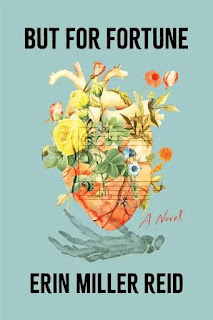
 The novel follows a medical student from rural Kentucky, Corinth Eaton, who longs to become a successful, compassionate doctor despite her struggle with debilitating anxiety and depression. After a consequential mistake, Corinth is suspended from University Hospital and assigned to work a month at the off-site state psychiatric hospital, the same facility where her grandmother was a patient for decades. It’s there that she discovers her grandmother’s old chart and begins the journey to piece together her family’s fractured past and understand the fate she has inherited.

Which character did you most enjoy creating? Why? And, which character gave you the most trouble, and why?

 But For Fortune has roots in my own family history. The grandmother in the novel, Mary Esther, spent most of her adult life in the state psychiatric hospital just as my own grandmother did, while I later worked in that same hospital as a medical student much like Corinth in the book. This novel is fiction though, so I didn’t want the characters to be carbon copies of my grandmother and me. As a writer, fiction provides me with the freedom to get at the truth of a story without having to uphold the truths of reality.

I had an easier time creating Mary Esther’s character because, in the beginning, she was less familiar to me. I never knew my own grandmother as a well, able-bodied person, a person who wasn’t addled by years of outdated psychiatric treatments. She was never able to relay stories of her youth or motherhood or how she’d felt as a patient in a state hospital. That lack of knowledge gave me free rein to create a fictional character with her own hopes, dreams, preferences, fears, doubts, and life experiences without the overwhelming influence of a non-fictional individual.

Corinth, however, was a much harder character to develop. As a medical student in the early 2000s myself, it was more difficult to distance my own character traits from hers. Like Corinth, I battled low self-confidence and uncertainty during those formative years, and I wanted to reflect those struggles in Corinth’s character without simply reflecting who I was twenty years ago. I wanted a character that was without a doubt not me, so that I could create space to write as honestly as possible. I intentionally imbued Corinth with character traits that were different from my own, and forced her to make choices I never would have made in order to distance her from the influence of my own personality.

Tell us a bit about the highs and lows of your book’s road to publication.

The biggest lows for me as a writer are rejections, which I received a slew of in my quest to find an agent. Naturally, there are only nos, and lots of them, before receiving the long-awaited yes. A handful of those rejections, the kindest ones, came as politely curt emails. However, most were no reply at all. The non-answer of silence stung and made the eight-month process of querying agents demoralizing. My high occurred when my novel was chosen from the slush pile (it does happen!) by literary agent, Heather Carr. Another high was my experience working with both her and my editor, Margaret Kelly. Their editorial recommendations were top notch, and they were the best cheerleaders, offering incredible moral support to me as a first-time author.

What’s your favorite piece of writing advice?

Pay attention. A writer’s job is to notice, to see connections in the world that others might not, to observe details, to listen closely to the cadence of natural conversation, to closely observe the habits and mannerisms of the people around us. I once had a teacher, poet Nickole Brown, who asked the class to observe an apple for ten minutes. We looked at every detail—the varied shades and texture of its skin, its shape, its weight. We were invited to taste it too. She asked us to smell the base of the apple, that part of the fruit with the strongest scent, the spot where it had grown from the tree’s aromatic flower, something none of us had ever done. Nickole’s exercise was a lesson in mindful attention. Writers need to view the world with eyes that are both curious and discerning. We must pay attention, which is even more important now in the distracted age of screens and smartphones. We need to collect the particulars and idiosyncrasies that color the world so we can tell a story with details that will hook and enchant our readers and hopefully offer them a fresh perspective.

My favorite writing advice is “write until something surprises you.” What surprised you in the writing of this book?

Throughout the book, both characters trudge through multiple downtrodden moments. They suffer periods of depression and experience heartbreaking betrayal, but, despite not planning it during my pre-write, both women also manage to find moments of agency. As I wrote, I realized that the human character, whether fictional or not, always strives toward self-preservation, empowerment, and hope.

 How did you find the title of your book?

My novel, But For Fortune, stems from the idea that each person, given a different set of circumstances, whether familial support, socioeconomic status, or place of birth, could lead a very different life. The novel explores the idea that despite our best efforts, any number of variables might upend good intentions.

My dad was a fan of 1960s folk music, and one of his favorite singers was Joan Baez. As a kid, I remember listening to her version of Phil Ochs’s song, “There But For Fortune,” on the dashboard tape deck while my dad drove me to and from church and school, on errands, and on family road trips. The song taught me at an early age that nothing in life can be taken for granted. The lyrics reminded me that it’s by luck I didn’t live in a war-torn country or that I wasn’t the person sleeping in an alley in the rain. The song’s refrain There but for fortune, go you and I was so formative to my worldview that it inspired the title of my novel and continues to inform a practice of gratitude and empathy.

Inquiring foodies and hungry book clubs want to know: Any food/s associated with your book? (Any recipes to share?)

A classic Appalachian meal is soup beans and cornbread. Soup beans, essentially pintos cooked with pork for flavoring, can be served with toppings like sliced onions or chow chow, as well as with sides like collard greens and fried potatoes. Personally, I don’t need the add-ons. I prefer my soup beans simple, with only a piece of cornbread crumbled into the thick broth so that it becomes more like a mush than a soup. My favorite cornbread recipe is from a woman who, though we weren’t related by blood, was a grandmother figure to me. I called her Miss Betty. She had the biggest, warmest heart—her home was always open and ready for company, she cleaned the church building in her spare time, she made the tastiest coleslaw and fried chicken, and she greeted me every time with a kiss on my cheek that left a pink imprint of lipstick behind. I was always delighted when I visited her and spotted a round loaf of cornbread on her kitchen counter whether it was still warm from the oven or left over from last night’s dinner. I have a printed recipe of her cornbread recipe, stained from my years of attempts to replicate it. There isn’t much measuring or precision to it: Add enough Mazola corn oil to cover the base of a cast iron skillet. Heat it until you see steam. Mix milk with cornmeal and flour until it looks like gravy, then pour it in the hot skillet. Transfer the skillet to the oven until the cornbread browns on top. I’ve had varying levels of success, but as much as I try, my cornbread never tastes quite as good as Miss Betty’s.

(A similar recipe can be found at: https://chunkyinkentucky.com/classic-southern-cornbread/)

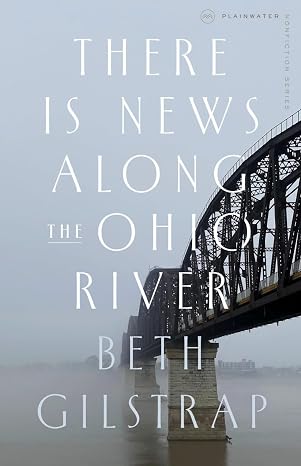
Field Notes from a Bridge Walker: An Interview with Beth Gilstrap

By Renee Kalagayan

Beth Gilstrap is many things—among them, a copywriter, an editor, an educator, a passionate mental health advocate, and a multi-genre (and inter-genre) author. She has written multiple books, and her latest one, There Is News Along the Ohio River (River River Books, 2026), is a hybrid flash creative nonfiction collection. I asked Beth some questions about the themes, techniques, and qualities of her newest book.

Give me your elevator pitch for There Is News Along the Ohio River. What is your book about in 2–3 sentences?

There Is News Along the Ohio River is my first hybrid/flash creative nonfiction book written about the period from 2020–2022 when I was living less than a mile from the Ohio River at the border between Louisville, Kentucky, and Jeffersonville, Indiana. Nearly all of it is my own experience or what I witnessed in my daily life and walks there on the pedestrian bridge that connected them. It explores place, mental illness, and the meaning of home.

You shared in a lecture at Converse University that you consider all your work to be hybrid. Could you share a little bit about the hybridity of the pieces in this book? What forms and genres are you playing around with, and how are the forms in conversation with the theme(s)?

I consider this book to be hybrid because it exists somewhere in between poetry and creative nonfiction. The pieces are all under 500 words, and short forms rely on strong imagery, lyricism, and movement. Every word is intentional. I use a lot of the tools of poetry and narrative, blending history with my own odd perception of the world due to c-PTSD. To me, genre is a set of expectations, so I suppose you can expect deep vulnerability, the story of my time there, and overall, my fierce desire to climb out of the darkness, and I hope, the same desire radiating out from all the people, places, and things that inhabit the area.

In your lecture at Converse, you mentioned that one of the most important things in hybrid and flash work is a strong title. Your title is also the first line of all the pieces in this collection. Did the pieces in There Is News Along the Ohio River all begin with the same first sentence originally, or did you discover the correlation later and write toward that end? How did you come to settle on your title?

The whole book started with a sign up on the Big Four Bridge where I walked most days. It came from a newspaper article in the late 1800s—it was the headline for a disaster that occurred during the bridge’s construction when I believe it was 18 workers were killed. Every day I walked past that sign. Every day, the rhythm of those syllables bumping up against each other knocked around in my brain.

Every day I gathered images from my walks. And I just started composing these little stories in my head as I walked long before I ever put them down on paper. The title came first. The title remained the opening line for each piece. I was inspired by Terrance Hayes’s American Sonnet for My Past and Future Assassin, who repeats the same line in each of the pieces in his stunning poetry collection. I also felt like it mimicked the flow of the mighty Ohio River herself. Always moving. Always changing. Ever present. How one strip of earth could change by the day, by the hour, and hold so much. Well, I suppose that was my main inspiration because my own brain felt equally as mercurial.

Were there any boundaries or limitations you intentionally (or unintentionally) set on your work as you wrote this collection? If so, what were they, and how did they help or even hinder the creation of your book?

My mental health was spiraling during this period, and though I will always love short forms, I stripped my approach down even further for this book. Five hundred words or less. This kind of constraint set me free at this time. I could not fathom working on a long project. Or even a traditional short story. But I could get 500 words down most of the time and I kept going until I felt like I’d told the story of that twenty-one months in all its heartbreak, shame, and sadness, and joy and resilience. Like my walks along the river, writing this book was my tether to this world.

How long did it take you to write this collection?

It took me about eighteen months to write and eighteen months to find a home for it.

You mention on your website that you are “a true southern goth/punk gal at heart.” Even though the pieces in this book take place further north, would you consider There Is News Along the Ohio River a southern collection? Why or why not?

It’s a strange place there at the border between Kentucky and Indiana. It’s a borderland. Some folks call it the South. Some folks call it the Midwest. Some call it Midsouth. It felt very different to the Carolinas, and that difference helped me see all the nuances of both. I don’t know that I consider it a southern collection, but people will always call me a southern writer, for better or worse. It oozes out of my pores, the orality of my storytelling, my history—and there’s plenty of southern gothic elements floating down there by the river.

Hybrid forms are some of the most difficult to write well, but (I believe) some of the most rewarding! What possibilities does hybrid work offer writers that more rigid understandings of genre do not? How did you see these possibilities at play in your book?

I think hybrid work is a fun place to experiment and play and innovate. At the same time, I think hybrid work is also an exceptional place to work on extremely difficult material, particularly in terms of trauma. Having been at this writing practice for more of my life than not, hybridity offers me a kind of freedom that trying to stay firmly with both feet in one genre does not. I could have told the story of these two years in a more traditional memoir form, but as I said before, that kind of writing wasn’t within my capacity at that moment. There was a freedom for me in not defining what I was working on while I was working on it that I think allowed for more authenticity in expression.

~~~

Beth Gilstrap (she/her) is a multi-genre author, copywriter, editor, and educator. Her debut hybrid/flash CNF collection, There Is News Along the Ohio River, was released in February 2026 from River River Books. She is also the author of two story collections: Deadheading & Other Stories (2021), winner of the Red Hen Press Women’s Prose Prize, and I Am Barbarella: Stories (Twelve Winters Press, 2015), as well as the chapbook No Man’s Wild Laura (Hyacinth Girl Press, 2016). As a neurodivergent human who lives with c-PTSD, she is open about her struggles and fearlessly vocal about ending the stigma surrounding mental illness. She lives with her husband and a bunch of cuddly fur muppets in Charlotte, North Carolina.

Renee Kalagayan (she/her), an Asian-American writer, editor, and native South Carolinian, is an MFA candidate in poetry and nonfiction at Converse University, where she is the assistant poetry editor for South 85 Journal. Recent work is featured or forthcoming in, among others, Carolina Quarterly, The MacGuffin, HAD, Relief, About Place, and the inaugural city-wide GVL Poetry Trail in Greenville, South Carolina.

You can find Beth @bettysueblue on Instagram and on her website, bethgilstrap.com.

You can find Renee @rkalagayanpoet on Instagram, Twitter/X, Bluesky, and Facebook.

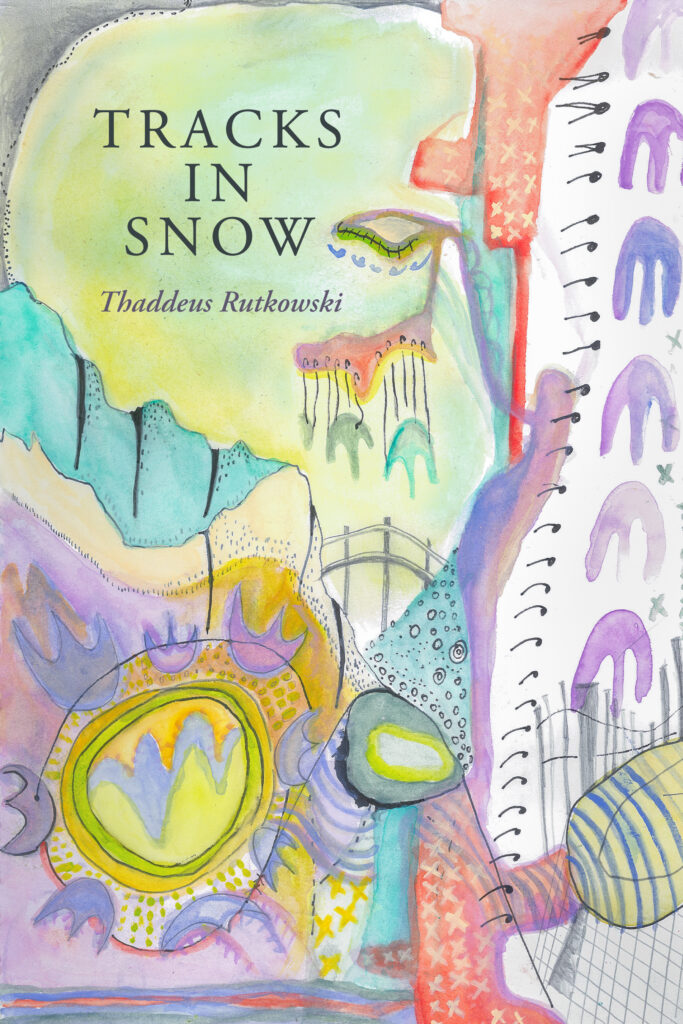
Interview with Thaddeus Rutkowski

reprinted with permission from www.workinprogressinprogress.com

We don’t expect an elevator pitch from a poet, but can you tell us about your work in 2-3 sentences?

Tracks in Snow is a collection of lyric poems inspired by my life as a biracial child in northern Appalachia and later as an adult in New York. The poems focus on themes of alienation versus belonging, closeness to nature, parenthood, and aging. Each poem contains telling details—the flapping of a bird’s wing, the sound of a mantra, the smell of charcoal briquettes—and a conceptual twist on the subject.

Which poem/s did you most enjoy writing? Why? And which poem/s gave you the most trouble, and why?

I most enjoyed writing the poems that have a strong sense of play. I’m aware of the shifting meanings of words, my method is a sort of systematic free association. For example, in the opening poem, “My Mother’s Name,” I look at my mother’s last name, Wang. It’s a surname in both Chinese and Scandinavian. The Chinese Wang can mean “king.” The Scandinavian Wang is derived from the Norse Vang, meaning “meadow.” Then there is the assonant Lang or Liang, which in Norse means “tall.” My mother and I cannot have that name because we are not tall people.

I also like to find the unexpected in the predictable. In the poem “Activist,” for example, a couple of young women try to prevent the clearing of trees next to New York’s East River. I learn that one of them usually wears a deer’s head when she protests, but she is not wearing it on this day because she doesn’t want to lose it. The women are detained and put into a police car as “guys in fluorescent vests” approach the trees with chainsaws. But the women aren’t daunted: They “saved four trees.”

What was most difficult was writing about loss. This can mean a response to the loss of a person, or it can be a feeling of emptiness or loneliness. When I took on my brother’s passing in a poem titled “Where My Brother Went,” I began with a question from our young daughter: “Where is he now?” I couldn’t answer that question, so I let her answer it. She says, after seeing his ashes scattered in the ocean, “He’s with the whales and dolphins.”

Tell us a bit about the highs and lows of your book’s road to publication.

The main task was assembling the manuscript. I had a week at the Virginia Center for the Creative Arts a couple of years ago and used that time to go through a number of poems. I kept the ones that seemed the strongest and put aside the weakest. I ended up with seventy poems, which I arranged in roughly chronological order. I ended up with a more or less unified manuscript.

I don’t have an agent, so finding a publisher was like shooting in the dark. I happened to see a submissions call from Finishing Line Press, which had declined an earlier manuscript of mine. I was surprised the publisher accepted this book. That was definitely a high. Then began at least of year of gathering blurbs, photos, and cover art; announcing presales; waiting for proofs; etc.

What’s your favorite piece of writing advice?

My background is in fiction writing (I’ve published five books of prose, three of poetry). My graduate-school teacher John Barth said that you should have a baseline story. You can improvise and riff off that baseline, but you should always come back to the foundation.

My own advice is to do as many writing-related things as you can: Take workshops, attend readings, go to conferences, reside at colonies. Do these things in addition to sitting at your desk. If you increase your connections, and your chances, something is bound come through.

My favorite writing advice is “write until something surprises you.” What surprised you in the writing of this book?

Each poem offered a surprise in the form of a new perception or understanding. The way I came to that result was through trial and error. That’s a simple way of putting it. I have some experience and purpose, and brought those to the process.

On a larger scale, the surprise was that all of these individual poems added up to something. What they formed was a picture of lifetime that is not so unusual, but that is filled with lived moments.

How did you find the title of your book?

I found the title of the book through childhood memories of identifying animals by the tracks they left in snow. I could recognize the tracks of deer, rabbits, squirrels, birds. . . . That led to a poem, “Tracks in Snow,” on why a squirrel came to my family’s door and left, probably because it couldn’t open the door and find food.

The title of this book also follows the title of my previous book of poetry: Tricks of Light. The two titles have the same meter, and “Tricks” and “Tracks” almost rhyme.

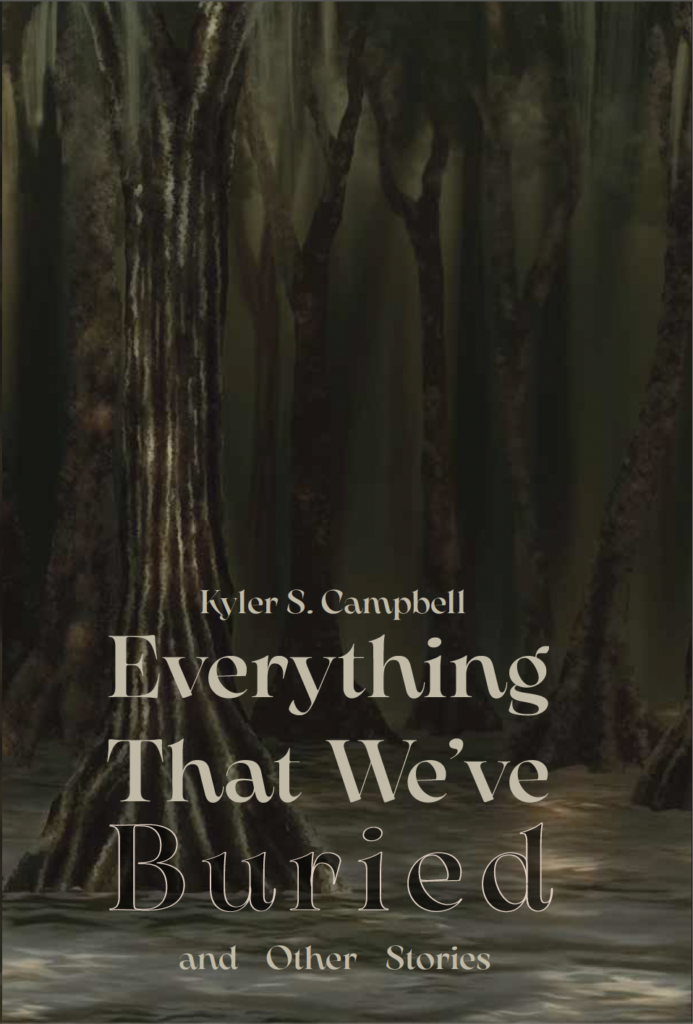
The Christ-Haunted Low Country: Kyler Campbell on Everything That We’ve Buried

By Jo Underwood

I interviewed Kyler Campbell on his debut short story collection, Everything That We’ve Buried. Campbell’s collection is set in the low country of South Carolina; he skillfully encapsulates, and diverts, Southern Lit traditions. Campbell incorporates his personal life into his work to tell stories that are both intimate and gritty, following characters that confront their faith, violence, and loss.

This is a deeply Southern collection. In writing it, were there any elements of Southern Lit traditions that you purposefully adhered to or subverted?

Adhered to, yes. Subverted, never intentionally. My first year at Converse, the best advice I got was from Marlin Barton, that “your first job as a writer is to just tell a good story.”

Flannery O’Connor said that the South is “certainly not Christ-centered. It is most certainly Christ-haunted.” That idea always stuck with me as I portrayed faith in my work. “Zombie Jesus” does that, as well as “Floodlines.”  Southern fiction is about life in the South, and our experiences and trials. A lot of it is about tradition and family, too. I leaned into that a lot, especially with how family dynamics haunt the characters in “The Last Dreamer.”

That was one of the big things for me: How do family dynamics define us, and how can we redefine them to become our own person? How does religion do the same?

As for the setting, some are set in a generic South but several are implied or confirmed to be in the Lowountry of South Carolina. What draws you to writing in that setting, is it writing what you know, or is there something creatively special about the low country?

The Lowcountry of South Carolina is defined by Charleston. Nobody talks about anything that’s outside of downtown Charleston. My goal was to show that the Lowcountry is way more than just Charleston. I wanted to go into the working, blue-collar Lowcountry.

I helped my wife while she worked for the Salvation Army, and I spent a lot of time in Moncks Corner and talking to people. People who grew up in and around Huger and Cross and Eutawville, which is a little outside of Berkeley County, around the Lake Moultrie area. Their stories were fascinating. They’re quintessential, traditional Southern stories about Al Capone and The New Deal, but with their own experiences laid into them. A lot of it came from just working in the area and talking to people and not being the writer in the ivory tower, but working in a thrift shop for a while, sorting through books, sorting through memorabilia, and having conversations with people who run a bread store down off White Street in Moncks Corner or whatever else and just hearing their stories.

At a reading of “How Will They Remember You?”, you mentioned this story and perhaps others holding personal connection to your own life. Are there any stories of that personal connection that you think enrich the experience of reading your stories?

Three of them in particular connect to my life. One of them is “Zombie Jesus,” which I mentioned before, because I grew up in a very religiously intense church. The story is about a family who doesn’t celebrate Halloween and a boy who’s kind of wrestling with why, and then a father who decides to proclaim the gospel to the neighborhood with a seven-foot-tall crucifix in their front yard. That one, in particular, is very personal to me. It’s kind of a goofy story compared to the rest of them, but it still deals with some of those same themes we were talking about—religion and how religion shapes us and causes us to do wild things sometimes. That one’s born out of my own experience when I was a kid. My family and I decided one year we weren’t going to celebrate Halloween, so we put a sign out in our front yard that said, “We don’t celebrate Halloween. We celebrate Jesus.” Then we sat in the living room with all the lights out. No porch light, no interior lights, like nobody was home. People still came to our door trick-or-treating. I just remember sitting there thinking, “This has got to be weird. This can’t be normal.” My parents and I have laughed about this for a while.

The second one that is deeply personal to me is the last story, “The Last Dreamer,” the novella that’s at the end. That one, in particular, deals with the aftermath of a parent’s suicide and a kid reeling from that and trying to find his own identity through it. I’ve had a lot of mental health struggles in the past. That one, in particular, came out of a conversation with my own counselor about how suicide affects the next generation. This story was me exploring mental health struggles as a generational curse.

The third one is “How Will They Remember You?” I did a genealogy project in school and found a father son pair that were both drafted into the Confederate Army together. They ended up in a POW camp up in Maryland. During the next census, only the father is reported. Piecing it together, my professor and I realized that the son probably didn’t make it.

Most of your stories in the collection feature scenes that do not play out in order of when they occur. How do you make the decisions on when to shift the chronology and when to go into flashback?

For me, it’s just a feeling thing. Some stories need to be in chronological order. A couple of them are. One like “Chucklehead,” in particular, is just one afternoon between two brothers. For me, I like a linear story, but I also like having those gaps filled in. The flashback is always kind of essential to understand what’s going on. I think you always want to make sure that they are correlating in some way. I’m thinking about the story about the parking attendant who finds the lost little girl on Folly Beach. Every time he mentions something that’s happening in the present, we’re kind of flashing back to a relevant part of his past. The same thing for “The Last Dreamer,” the novella at the end, where you’ve got a character who’s seeing these visions of his mom in a bloody bathtub. We flash back before that, and it’s kind of, “Here’s the scene, and this is what he sees. Here’s the scene, and this is what he sees.”

As far as when to break it and when to say, “Okay, now we go to a flashback,” or, “Now we go back to the present action,” it all depends on where you feel like the story ends. There’s so much instinct in writing, and instinct comes with time. Instinct also comes with failure. The more you fail, the better your instincts get.

What is something about the collection that you hope people will notice that they may be less likely to?

I hope people notice that there is faith in this book, that there are elements of redemption, elements of forgiveness, and maybe penance in some ways, too. There are stories here that seem very anti-religion in some ways, but, like I said at the top, I’m a religious person and count myself as that. What I hope people take from it is that there is a lot of faith in this book and a lot of faith-based themes and ideas, even though it may not seem like it on the surface.

The other thing that I hope people take from this is that the Lowcountry of South Carolina is a complex place. It’s not just beaches and downtown and Francis Marion Square and all of that. It doesn’t always look the way that we want it to, but it’s still there, and it’s still kind of present and active.

I just started the MFA program from which you graduated. How did the program prepare you for writing this collection?

What the MFA program did for me was help me build habits of writing. You have to carve out that time to write. One of the things I learned going forward is that it gets more complicated as life goes on. You add in a family, you add in kids, you add in a full-time job, a second job, whatever else, and things get more complicated. But the MFA program taught me how to discipline myself and how to expect better things from myself as well, and how to push myself.

~~~~~

Kyler Campbell lives and teaches in Charleston, South Carolina. His work has been featured in Driftwood, Cumberland River Review, and elsewhere. This is his first book.

Jo Underwood is a writer from Greenville, South Carolina. She is an MFA candidate at Converse University. Her creative work has been featured in Ambient Heights, Trace Fossil Review, The Library of Poetry Collection, The Lindenwood Review, and Olive & Ash. She is the recipient of the 2024 Gilmore Award for Excellence in Creative Writing. When not writing, she spends most of her time teaching English or playing Dungeons and Dragons on Youtube.
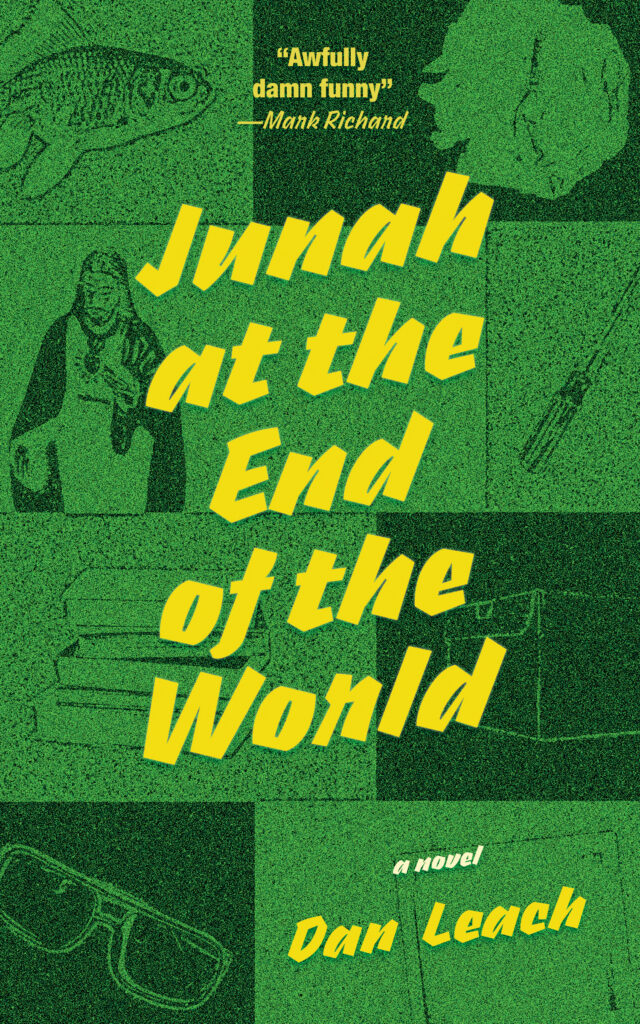
Write Like a Boozehound and Keep Looking: A Conversation with Dan Leach About Junah at the End of the World

By Jo Underwood

I sat down with Dan Leach for a nostalgic conversation about his 2025 Hub City novel, Junah at the End of the World, which received the South Carolina Novel Prize and the Kirkus Star. Dan Leach reaches into the heart of the cracked sidewalks of southern suburbia and pulls from it a time capsule of the small apocalypses that every child must live through. His novel, via fragmented prose, reflects the inner mind of sixth grader Junah in the face of the impending Y2K, but his masterful storytelling can only be seen as complete.

Can you talk about the setting of the novel first? You’re a southern writer, and you chose to set the novel in a neutral, “Carolina,” but while also namedropping Northwoods Middle [a middle school in Greenville]. What made you choose this small corner of South Carolina, and how did you navigate writing about somewhere you’ve lived and worked for such a large section of your life?

This is my fourth book, but I would say that this is the first one that takes place in my South. That’s a very pretentious way of saying that in my first two books, I was still writing out of the shadows of writers like Ron Rash and George Singleton. They are interested in the South, but a South that is a little more rural, a little less suburban, a little more mountainous. Whereas I grew up in the Upstate of South Carolina, and I think it just took me that time to be comfortable enough to write something that was really close to autobiography. So I attended a middle school called Northwood Middle in Greenville. The characters, the places, and the events of this novel, with the exception of two details, are drawn from my lived experience.

One of those details is Junah’s age. Junah is twelve, and in Y2K I was a little older. I fudged that because I needed him to be a little more innocent and tender. The other is the fact that the parents are divorced in the novel, whereas in my lived experience they stayed together. Except for those two details, the book functions very close to autobiography, and I think that that makes it a special book for me. Looking back, I think with my first few books I was trying to write the South of back roads and dive bars and trailer parks. I grew up around that, but I also grew up in the world that Junah moves through. I grew up in middle-class suburban neighborhoods, cul-de-sacs, shopping centers, and little league fields.

During a reading at M. Judson Books in Greenville, South Carolina, you said that Junah was “a novel about COVID disguised as a novel about Y2K.” Can you talk about the role of isolation and dread in the novel in terms of your intentions to implement both?

I think that books, in late-stage capitalism, are treated as products. There are things that you work on according to a certain set of intentions or plans, and then you produce them, and they look awfully pretty, and then they get covers and make their way to bookstores. But books aren’t really products.

In 2020, I relocated my family from the Upstate to Charleston. I was trying out a one-year contract with a liberal arts college, and I was told that it probably wouldn’t even renew because the world was ending. Nobody knew if academia, or civilization, would still be standing after 2020. I was working out of a little garage that we had all our boxes in; we hadn’t even bothered to unpack yet because we thought we would have to leave soon. And in that space, under those circumstances, I became strangely reminded of the late 1990s, which was another moment that split the country in terms of what people thought would happen, called into question the intersections of religion and politics, and really forced you to reckon with things that were outside of your control. As a kid, you’re being told that computers don’t understand the year 2000, and so planes could fall out of the sky, and Jesus might come back on a cloud. You’re not happy about it, but it’s more complicated than being afraid. You just have to sit with it and still do your daily life.

That’s what COVID felt like. It was like being a child again. We don’t know what this thing is. We don’t know where it came from. And yet we have to go on. We have to buy groceries, attend church services, work jobs, and pay bills. That sense that the apocalypse was here. I tried, in my own way, to translate that feeling into a book about Y2K.

You also have been quoted saying that Junah talks about the “Little apocalypses that every child must survive,” giving the examples of experiencing your first love, questioning your religion, or standing up to your middle school bully. How many of these small-apocalypses that Junah experiences were from yourself or a former student?

Every damn one of them. What I did in the book, and what I have so much fun doing as a writer, is creating composites. There’s a character in the book, Coach Mac. Every day after school he goes up on the roof, brings with him a box of beer, lifts weights, and listens to Clearwater Revival. The kids at the school throw rocks up at him.

Now, if the question is, “Did you actually have a coach named Coach Mac who went up on the roof, lifted weights, ripped cigarettes, and threw beer cans through the halls?” the answer would be no. But if you’re asking whether he’s a composite of different people from my past, absolutely. I actually did have a coach who was a Vietnam veteran. He teared up in front of us one day while listening to Creedence Clearwater Revival, and that memory stayed with me. I remember him talking about the song “Who’ll Stop the Rain?” and saying something like, “The rain is war. No one’s going to stop it.” Then I have this other memory of a guy I worked with on James Island who would go out onto the roof to sneak cigarettes and sneak drinks. He was this audacious figure who would drink on the roof, and everybody kind of knew it, but nobody did anything about it. So I had one memory, and then another memory, and I sort of combined those two.

Most of the characters in the book and most of the places are like that. They’re actually two or three very real people blended together. For me, that’s the easiest way to say that something is both true and fiction. People think that’s a contradiction. We’re not journalists. It’s not a matter of reportage. We’re not trying to capture exactly what happened with surgical precision. We’re trying to tell you what it was.

Can you talk to us a little bit about what your writing process was like for Junah? This novel is written in fragmented prose rather than chapters, obviously to emulate the different entries Junah is putting into his time capsule. If another writer is hoping to pull off this hybrid between an epistolary/fragmented prose novel, what craft tips do you have for making this non-traditional form work?

As George Saunders says, “Inspiration finds me at the writing desk.” I’m a big fan of structure and a big fan of discipline. But for me, the best way to write a fragment is to write across the fragments of your day. Which is to say, write at a red light. Write on the clouded door of a shower. Write in the bathroom. Write on a coffee cup. Write on scraps of paper, on the backs of receipts, in the Notes app on your phone, and in voice recordings.

To me, we live such fragmented lives. Unless you enjoy an enormous amount of privilege, most of us move through different roles, responsibilities, and spaces throughout the day. My life has always been a little chaotic. You can respond to that chaos by saying, “I don’t have time to write at all because I need a large block of uninterrupted time.” But if I took that approach, I would never write.

So my craft tip is this: you should write the way a boozehound drinks.

Have you ever known a true alcoholic? They’re always drinking. Every time they step out. Every time they pull over at a gas station. It’s in their orange juice. It’s in their milk. It becomes part of the rhythm of their day. Fragmented writing can work the same way if you’re willing to open yourself to it. You write a little paragraph while you’re stuck at a red light. You write a little scene during a fifteen-minute break between classes. Then, when you have a larger block of time, maybe you write something more developed. The beauty of fragmentation is that you can take all of these things you’ve created throughout the day and then step back and see the thematic threads that emerge. This fragment is about a crush on a girl. This fragment is about praying to God. This fragment is about a relationship with a parent. Suddenly you realize they’re all related. Then you get to take those seemingly chaotic pieces and do the real work of arranging them, almost like meticulously organizing a collage.

I think one of the deepest insecurities any writer has is reaching out for connection and worrying that someone won’t be able or willing to meet you there. The text exists in that space between writer and reader. Fragmentation pushes that relationship right to the edge because you’re relying on a certain kind of reader: a smart, careful reader who pays attention to the fragments and the ways they connect to one another.

The narrator, Junah, has a very mature and existential voice, considering the first person and epistolary format. In many ways the novel needed that mature narrator. Was this voice for Junah intentionally wise beyond-his-years, or was that something you stumbled into?

The only bad review I have on Goodreads is a single sentence: “Twelve-year-olds don’t talk this way.” And they don’t. Twelve-year-olds do not have the metaphors, the vocabulary, or some of the intellectual range that Junah has. What I’m doing here is an old trick. It’s a Catcher in the Rye trick. It’s a J.D. Salinger trick. You make the character intellectually mature, and then you make the emotional and social dimensions of that character childlike. Junah is book-smart. People-smart, no. He’s so smart that he can process his parents’ separation in terms of the subjunctive mood. But he’s also so dumb that he doesn’t know how to take his sunglasses off to talk to a girl he likes.

There’s a line from Richard Hugo that I always come back to: “The town that you put into a poem is not the town that is. It’s the town that the poem needs.” For me, this was the speaker I needed. I needed someone who was scared and emotional and vulnerable, but who was also grammatically and linguistically gifted enough to carry the book.

What is something in the novel that you wish more people would ask you about or comment on?

First, I wanted the book to feel musical. For people of my generation who grew up in the mid-’90s, one of our great currencies was the mixtape. We made mixtapes for the people we were obsessed with but were too scared to talk to. But something strange happens. At some point, you become more obsessed with the mixtape than with the person. That’s kind of Junah in a nutshell. He’s supposed to be processing reality, in this case, an announced apocalypse. But at some point he becomes really obsessed with the mixtape itself. I wanted the book to feel musical in that way. Then, later in the novel, he falls in love with this older, tougher, wiser punk girl, and she introduces him to a ton of those great punk bands of the time. That was one of the great thrills of growing up: discovering some guy from England in a leather jacket with tattoos who was voicing all the frustrations you had with the government, your parents, religion, and authority, and doing it in a way that felt exciting.

The second thing is religion. The mother in the book, not unlike my own mother, is a sort of iconic evangelical. She’s processing this announced apocalypse through the lens of Christian mindset, which was very much a part of the culture at the time. In some ways, the book is a defense of spiritual curiosity. Junah cannot accept God as God has been handed to him by his mother. She prays with him nightly. She’s pushing spirituality through this classically Southern, evangelical vocabulary: Let Him into your heart. Build a relationship with Him. Turn your life over to Jesus. Trust in the Lord. These are all clichés and platitudes that you’re bombarded with while you’re trying to figure out the world for yourself. Junah, though, is completely earnest. His mother says, “Look to God,” and he takes that literally. He goes outside and throws rocks into the sky, almost as if he’s asking, “Is there a piece of glass I need to break to have God hear me?”

Your book is published by Hub City Press, a small press located in Spartanburg, SC, home of the Converse low-res MFA program that supports this literary journal. What are some of the benefits (or drawbacks) of working with a small press?

The drawbacks are what everyone already knows: regional presses mean regional exposure. There’s no small press on earth that can compete with the Big Four. Penguin is going to be able to put your book in more places physically, but also in terms of publicity, visibility, and exposure. It’s simply a matter of resources. Hub City has three employees. That’s different from a company with three thousand people who can throw their time and expertise behind your book.

That said, within that smallness there is a level of attention and support that’s really special. Hub City, specifically, takes on projects they believe in, and they care about every step of the process from developmental edits to cover design. I had month-long conversations with them about fonts, images, colors, and design choices. We also had very intimate and fascinating conversations about the title of the book. The book was not originally titled Junah at the End of the World. It was originally titled Challenger, which is the name Junah sees on the shoebox. I suggested titles like An American Reliquary; they weren’t convinced. Then they proposed Junah at the End of the World, and I hated it. I never saw Junah’s name as the title, but this was a group of people having a genuine conversation about how to make the book better. I genuinely think it’s one of the best small presses in the country right now. Their roster is incredible, and I’m thrilled to be a part of it.

Do you believe your novel should inspire hope for people, or is it one that will send its readers further into their “world-is-ending” doom?

I hope it’s the first. The first line that ever came to me in Junah’s voice was: “Hey, Dad, do you think it’s dumb to love the world?” I wanted a protagonist who would love consistently, not someone who is constantly turning away from that. There aren’t a lot of happy literary traditions. There’s a tendency in fiction to make things more despairing, more cynical. Writers like David Foster Wallace talk about how good writing comforts the disturbed and disturbs the comfortable.

Without giving anything away, there’s a moment at the end of the book; it’s December 31st, the ball is dropping, and Junah is trying to keep his eyes open. He’s watching closely. He wants to know what’s going to happen. And that, to me, is the point: we want to know what’s going to happen.

One of the best descriptions of this I heard was, I was talking to Sebastian Smith, who is Gen Z, and I asked him what COVID did to his generation. He said, “It put a question mark at the end of every sentence.” It is no longer “I will go to college. I will get a degree. I will get married.” Now it is: “Will I?”

Everyone has some kind of “shoebox,” even if the world feels like it’s falling apart. Within this endless sea of questions, you can either shut down, or you can keep looking. I hope my novel encourages readers to keep looking.

~~~~~

Dan Leach has published poems and short fiction in The Massachusetts Review, The Southern Review, and The Sun. His most recent novel, Junah at the End of the World, won the South Carolina Novel Prize and was awarded a Kirkus star. He lives in Summerville and teaches writing at Charleston Southern University.

Jo Underwood is a writer from Greenville, South Carolina. She is an MFA candidate at Converse University. Her creative work has been featured in Ambient Heights, Trace Fossil Review, The Library of Poetry Collection, The Lindenwood Review, and Olive & Ash. She is the recipient of the 2024 Gilmore Award for Excellence in Creative Writing. When not writing, she spends most of her time teaching English or playing Dungeons and Dragons on Youtube.
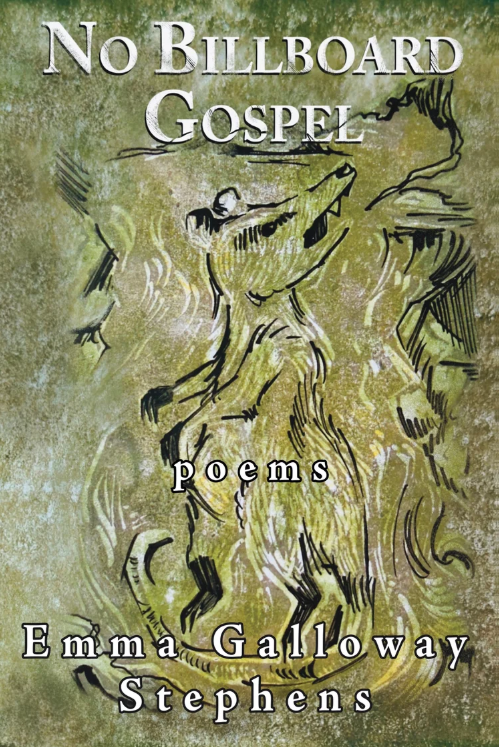
Godhunger & the Commodification of Faith: An Interview with Emma Galloway Stephens

By Renee Kalagayan

Emma Galloway Stephens is a poet, a native Appalachian, a professor of English literature and creative writing, and, most recently, a book author. Her debut collection, No Billboard Gospel (Solum Literary Press, 2026), is driven by the question, “If God exists and is good, then why does he allow evil?” Written in the Southern Gothic tradition, her poems lead readers along a kudzu-ridden, red Carolina clay path to uncover the answer. I asked Emma a series of questions that each deal with a subject, technique, or quality present in No Billboard Gospel.

This collection is very outspoken against “the commodification of faith.” I especially love your use of the term “Godhunger” to describe your insatiable drive to uncover the roots of your doubt and your anger toward injustice and hypocrisy. How have you seen faith emerge as a commodity in modern times, or even in the arts? How is poetry uniquely suited to answer this issue? Did anything ultimately quell your Godhunger, and if so, what?

I think faith, and Christianity in particular, has a centuries-long history of commodification. Christ drove out money changers from the temple. The Protestant Reformation happened in part as a response to indulgences—the church collecting money from parishioners to buy their loved ones’ passage out of hell—allowing church authorities to live in luxury at the expense of the poor worshipers. There’s a reason Jesus spent so much of his time warning against the dangers of hoarding wealth. There’s something about religion’s universality that attracts those who would use it to manipulate people. Godhunger is universal—I think we’re born craving a knowledge of something higher than ourselves. Godhunger makes us want to know and be known. It’s a good desire—but it’s unfortunately an exploitable one.

Poetry, I think, is an inherently spiritual art form, and therefore a good vessel for articulating this universal Godhunger and condemning those who would exploit it. Poetry is among the oldest art forms in human history, and we’ve used it for communicating with and about the Divine for as long as we’ve had it. It connects to the soul in the same way music does because it depends on musical conventions of patterned sound and rhythm. I think it’s significant that so many of the Bible’s books of prophecy are written in verse—poetry has always spoken truth to power. I think its inherent spirituality is part of why it’s less marketable than fiction or nonfiction—and that is a mercy. You won’t find many billionaire poets.

Godhunger is insatiable, I think. The more you know of God, the more you want to know. This unending curiosity is exciting to me. I think I’ll get many more poems out of it.

How did you select the title of your collection?

I wrote “No Billboard Gospel” (the poem) in one hour-long writing session. It’s one of the few I’ve written that arrived fully formed, and not in need of significant editing after I wrote the draft. This poem was among the last I wrote for this collection. After around two years of ruminating on its themes and images, I sneezed out a poem that summed up what I felt the collection was about—that faith is a redeeming force that crushes the sins that cripple us, and not a cheap commodity or cultural identifier or easy answer to hard questions. Up to that point, the book was called River Songs. I retitled the book to match the poem I decided was now its centerpiece.

You said in an interview with Skipjack Review that your favorite way to end a poem with a “gut punch” is to use rhyming couplets. Are there any heroic couplets in No Billboard Gospel that surprised you? Which one is your favorite?

There’s a couplet at the end of “The Devil Beats His Wife” that surprised me. It’s not quite heroic—the final line is only two iambs, not five—but most of my formal verse follows “the rules” selectively, anyway. The poem in the book is a revision of a much longer poem that I wrote in the fall of 2024. I’d sent it around to several magazines without success, so I decided to revise it a yearish later by cutting out some couplets. The line “and so’s the sky” was a new line I added after I cut whatever else I’d had after “She knows his oily well is nearly dry.” It’s a poem about the inevitable end of evil—that it’s self-exhausting and self-devouring—and will end with the same certainty that we know a rainstorm will end. I liked the parallelism it offered to the opening image.

No Billboard Gospel is rife with critters. You describe them in “Roadkill Sonnet” (my favorite poem) as “saints of every shape.” How did you come to connect animals with sainthood/priesthood? Also, St. Joan the Opossum is a recurring mascot throughout the book. How did St. Joan come to be? What is she symbolic of, or the “patron saint” of? Do you plan on writing more about her or Friar Raven in the future?

I’ve always suspected that animals intuit more about the nature of God than humans have riddled out over centuries of arguing. The idea of a possum as a kind of priest is not original to me—I got the idea from the song “Possum by Night” by The Mountain Goats, which is in the voice of a possum going about his nightly routine, calling on the bugs on his body to “praise the Lord” and naming garbage collectors “true sons of the living word.” Possums are “sin eaters” of a sort—they eat disease-spreading insects, trash, things other creatures won’t touch. They aren’t well-loved, as their appearance can be off-putting, and their lifespan is short. You’re more likely to see them dead on the road than alive in the wild. If any creature were to become a sainted martyr (venerated for their short, difficult lives; known better for their deaths than their lives), a possum fits the bill.

The name Saint Joan the Opossum is just a pun on Saint John the Apostle, the disciple who wrote the prophetic Book of Revelation. Saint Joan’s vision of God both empowers and disables her, with one eye retaining regular sight but the other going white and blind, yet able to perceive the spiritual world. In my mind, she’s the patron saint of childlike faith. Her poems are intentionally whimsical and light. Faith is as natural as breathing to her because she’s capable of understanding more than the book’s human speaker. She embodies the notion that faith can be natural and even feral.

I’ve floated the idea of a children’s book featuring St. Joan and friends, but writing for children is a precise and sacred science I’d need to take the time to learn first.

Your poems largely employ the use of form, specifically what you call “messed-up sonnets.” Can you elaborate on how form serves your work, and how it guides your writing process? Are there any forms that jump out at you in No Billboard Gospel that helped you to communicate your message more effectively? How is form in conversation with content in your collection?

I enjoy writing in forms. My best poems are “messed up”/slant sonnets. And most of those sonnets are accidental. I’ll try to write something longer, start revising, and end up with a 14-line poem with a discernable five-foot rhythm pattern, a volta, and a rhyming couplet at the end. I just like the shape and brevity of a sonnet. But I’m an imperfect formalist—the rules don’t always serve me, so I don’t follow all of them for every poem.

There are a lot of sonnets in NBG—over a quarter of the collection. Sonnets are great for creating swift, memorable impact. They’re not long; you have to be selective in the images that you choose. They require some manner of rhyme, at least at the end, which allows for the one-two punch of a rhyming couplet to the gut. The journey from beginning to end is short and satisfying, in the reading and the writing. Most of the sonnets in this collection grapple with some kind of grief. The form doesn’t prolong the grief, but contains it. I think I gravitated towards sonnets in this collection because they’re good for making difficult subjects feel more digestible.

I’ve tried to branch out to other forms, like villanelles and pantoums and sestinas. Usually they turn out stilted instead of inviting surprising revelations or phrases. One day I’ll figure out how to write well in other forms, and then I’ll be unstoppable.

You’ve mentioned to me that you have a friend who has prayed through a few of the poems in No Billboard Gospel, like a liturgy. Faith is very important to you and your work. How did your faith inform the writing of No Billboard Gospel, especially in relation to the commodification of faith and the political threads you touch on? Did any poems begin as prayers?

Most of the poems in NBG are prayers. I wrote the book when I was having a hard time praying the way I’d grown up praying—in silence, with my hands folded and eyes closed. I couldn’t sustain the practice. So I started writing poems as a way of processing what I’d wanted to pray about. “Psalm 4” became a prayer—it started as an interpretation of the images of its namesake psalm in the Bible, but became a genuine expression of my own frustration. All of the “River Song” poems, “Contusion,” the last two lines of “The Last Summer of the Kumquat Tree,” “Poetry of Witness,” “River Wade,” “March on Paris Mountain,” “The Whirlwind,” “This Feral Faith”—all [these are] prayers of a sort. I had many questions (and complaints) to bring to God, and they all took this shape.

While I wrote the poems for this book, I was assessing my faith after years of running on spiritual autopilot. The poems reflect this process of assessment—others have called this process deconstruction, but that’s not the term I prefer for my experience. I prefer restoration, which is why the last poem of the collection has that title. The more I understood about Christ—the originator and center of Christianity—the more dissatisfied I grew with how American cultural Christianity functions more like a brand identity and a useful voting bloc. Christ offers radical transformation and relationship—even friendship—with God. His promises have outlasted many empires, and will outlast today’s. I gravitated towards older expressions of the Christian faith that include liturgy, early Church creeds, and focus on the centrality of the Gospel. My faith simplified and solidified the more it engaged with Christianity’s mysteries. I’ve learned I don’t have to have all the answers. I’ve learned that loving Christ should transform me into a more loving neighbor. That perfect love casts out fear. I think the poems in NBG reflect this arc.

My favorite way you’ve ever described writing poetry is as an avenue of “soul care.” How has No Billboard Gospel served as soul care for you? What do you hope your poems do for others?

I wrote these poems as a way of sorting through my personal doubts and griefs. Writing the poems helped clear a besetting fog. My habit is to write poems about subjects that trouble or puzzle me. In this way, writing feels a bit like praying. It’s an inherently spiritual process to me.

I’ve had a reader or two tell me that my poems captured many of the complex feelings they’ve had about their faiths—I think, from their reports, that I’ve done what I set out to do. I would like those who read my poems to feel less alone in their doubts. I want them to feel hopeful in the ongoing mystery that is the process of living out our faith.

~~~~~

Emma Galloway Stephens is a neurodivergent poet and professor from the Appalachian foothills of South Carolina. Her poems have appeared in Red Branch Review, The Christian Century, Door is a Jar, Salvation South, and many others. She is a co-founder and the Educational Director of Arbor Institute for the Arts in Greenville, SC. Read more at egstephenspoetry.com.

Renee Kalagayan, an Asian-American writer and native South Carolinian, is an MFA candidate in poetry and nonfiction at Converse University, where she is the assistant poetry editor of South 85 Journal. Her work is featured or forthcoming in, among others, HAD, Relief, About Place, SoFloPoJo, and the city-wide GVL Poetry Trail in Greenville, SC. Find her on social media @rkalagayanpoet.

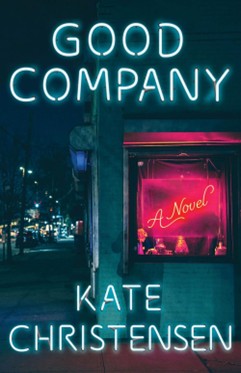
Interview with Kate Christensen

reprinted with permission from www.workinprogressinprogress.com

Give us your elevator pitch: what’s your book about in 2-3 sentences?

Okay, here are three (it’s very hard to boil it down): A middle-aged, midlist novelist named Julia Heimdahl spends a weekend at a literary festival at Baldwin College, her alma mater, to promote her memoir. She’s on a panel with a fawning, unctuously charming fellow first-time memoirist, a literary biographer named Ellis Blackwell. Her alliance with Ellis threatens her hard-won stability, and excerpts from her memoir interspersed with the present narrative illuminate exactly why he’s particularly dangerous for Julia; simultaneously, she’s forced to reckon with the past as it intersects with the present.

Which character did you most enjoy creating? Why? And which character gave you the most trouble, and why?

I had the most fun creating Ellis Blackwell. I seem to have a troublesome soft spot for men who hate women—in fact, that is exactly what Good Company is about, my own complicity in misogyny. I enjoy inhabiting the point of view of horrible men because I understand them so deeply, I’ve studied them so closely, the dialogue writes itself. My survival, I thought when I was younger, was predicated on winning their approval. Good Company turns this idea on its head and explodes it.

The hardest character for me to write was Lexi/Alex Shapiro, a composite of women I’ve known in my life, women I’ve been deeply attracted to both sexually and emotionally. I think that Alex was complicated for me primarily because of my own largely unexpressed queerness, which has been largely latent all my life. Creating this character meant not only facing the attraction but acknowledging the reasons it has stayed underground: fear; internalized misogyny; and an innate conventionality, a kind of homophobia. Writing about all this made me sad, but it also ultimately felt bracing and clarifying.

Tell us a bit about the highs and lows of your book’s road to publication.

I conceived of this novel in the summer of 2024, when I was teaching in the summer graduate program at the Iowa Writers’ Workshop. I had written a story based on a passionate, complicated friendship I’d formed when I was a student there in the 1980s with a woman I call Norah who died when we were in our early 50s, estranged for many years. I chose that story for my faculty reading. The audience’s response was unlike any I’d ever had before after a reading: electric, excited, buzzing. Normally any enthusiasm was muted: this was a roar. They asked, “When is this book coming out?” And I realized over the next few days, thinking about it, that this was in fact part of a book, and that the book was going to play with time and memory and identity.

There haven’t been any lows (yet): my editor at HarperCollins, Sara Nelson, bought the manuscript and gave me incredibly helpful edits, and the book’s road to publication has been smooth (so far). But internally, I’ve undergone a long inward reckoning with what I’ve written. Good Company contains many hard truths, many levels of exposure, and a lot of difficult subject matter. It’s a raw, honest book, and it was galvanizing to write—but now that it’s emerging into the world for people to actually read if they want to (and I hope they do want to), I’ve had to overcome my terror and fear. Actually, I haven’t entirely overcome it. But that’s just the price you pay for telling the truth.

What’s your favorite piece of writing advice?

This is something I tell my writing students over and over: you can only write like yourself. Your authentic voice is the only one you have. Banish the anxiety of influence. Don’t try to be someone else, don’t try to be “great.” It won’t work. It never works. Trust your gut, let yourself tell the truth, give yourself permission to write “badly” (meaning authentically), and always remember: no one is watching you.

My favorite writing advice is “write until something surprises you.” What surprised you in the writing of this book?

I was surprised by how inevitable this novel’s form felt while I was writing it, how necessary, apt, and urgent. Inspired by Heidi Julavits’s brilliant memoir, “The Folded Clock,” I wanted this book to take a structural risk with temporal sleight of hand, simultaneously spanning both a weekend and a lifetime. I wondered if would work and was prepared to fail. But to my surprise, not only did it strike me as right and organic while I was writing it, but this strategy also felt inevitable. Every time I finished a chapter in the novel’s present, the next memoir excerpt presented itself as the obvious next step.

How did you find the title of your book?

I chose the title “Good Company” because it’s something a certain kind of man has called me since I was a teenager. I used to see it as a badge of pride: I was good company! That meant I was fun, easygoing, a good sport, smart, sexy, and—most importantly—not a killjoy.

But then, when I started getting older and wiser, I saw the term for what it really is: a misogynistic, backhanded compliment that’s actually a means of keeping me under control. The book is about my own complicity for much of my life in trying to please such men, to win them over. And the title is meant to be loud and clear: no more.