Representing South 85, editor Leslie Pietrzyk recently sat down with Becky Tuch, who runs the popular Substack Lit Mag News for a wide-ranging conversation about how to get your manuscript noticed, our reading process, and how to navigate fallow writing periods. Check out Becky’s Substack for written highlights and then watch the full interview (about 60 minutes).
Category Archives: All Journal Content
Interview with Lacey N. Dunham

reprinted with permission from www.workinprogressinprogress.com
Give us your elevator pitch: what’s your book about in 2-3 sentences?
Deena Williams is an outsider with a secretive past who will risk everything—including her life—to fit in.
At secluded Bellerton College, Deena is desperate to join a powerful clique of wealthy girls anointed the Belles. She’s welcomed into their group with the gift of a black velvet ribbon, and the comfortable life she’s always dreamed of is within reach.
But Bellerton hides a sinister history, and soon Deena is caught in a web of secrets, lies, and dangerous games in this chilling Southern gothic dark academia debut mashup of THE SECRET HISTORY, BUNNY, and HEATHERS.
Which character did you most enjoy creating? Why? And which character gave you the most trouble, and why?
I loved writing so many of my characters, it’s hard to pick! Ada May was a character who conjured herself, which is appropriate to her character’s genteel sinisterness. I hadn’t originally envisioned her in the book, but she quickly became the foil to my protagonist, Deena, and with her presence the book became a better, more interesting story. I also loved writing Fred, an iconoclastic young woman who is utterly unapologetic about who she is. Fred might be my favorite character in the novel.
Mary’s character was more challenging to write than I expected. I knew her background and her role in the story’s plot, but figuring out how to put her on the page while revealing the bits of mystery surrounding her at the right moments was difficult.
Tell us a bit about the highs and lows of your book’s road to publication.
Publishing is a journey of highs and lows! I’m very lucky and privileged to have landed with an editor, the terrific Laura Brown, who understood my vision of the book and worked with me to elevate it to the greatest version of itself. And Atria has been terrific, the whole team there has been wonderful to work with.
One aspect of the publishing journey that isn’t talked about as much as the agent query process is the submission process. Writers are immensely focused on getting an agent—an important thing, especially if you’re interested in publishing with Big 5 and prestige indie presses like Graywolf or Algonquin—but for every book an agent has sold, they have five books from clients whose died on submission. I was, again, very lucky that this didn’t happen to The Belles—but it could have!
I think it’s important for writers to know that the journey doesn’t stop with getting an agent. There are no guarantees in this business. The journey continues for a long time beyond the agent, and it’s an emotionally challenging and difficult journey with no security at any point. Your book, and your career, face numerous hurdles every step of the way. And again with the next book. And again beyond that.
What’s your favorite piece of writing advice?
Stay connected to your creativity. The writing is yours; publishing is a business, and it’s a brutal one. There’s so much romanticization around book publishing. I encourage writers to stay grounded. Write for you, first and foremost. Not towards trends. Not towards what you think you “should” be writing. Not to the critics in your head. Not to the readers in your head. Write for you.
Then, worry about all the other stuff later. It becomes all-consuming and gets in the way of the creative work.
My favorite writing advice is “write until something surprises you.” What surprised you in the writing of this book?
I have a drawer novel that I labored over for a decade. That novel was a book I wrote out of shoulds. It was not a book I wrote out of my own interests or obsessions, though I didn’t recognize it at the time. When I decided to write The Belles, I had two rules for myself, and the first one was that I wanted to write a book I would enjoy reading. A book that was wholly composed of things I love. What surprised me most was how much I enjoyed the actual writing process of The Belles once I followed my own obsessions, tastes, and interests rather than someone else’s ideas of a book.
How did you find the title of your book?
I’m terrible at titles! I think most writers are. The working title for The Belles was awful for a long time. I can’t remember when I decided on The Belles, but it’s perfect. It’s a title that references the group, and the consequences of conformity are a major theme in the book. The novel is set in Virginia, and the word “belles” is evocative of Southern Belles, a deeply complicated heritage that the young women in my book would be emerging from. The word “belles” also means “beauty” in French, and toxic white femininity is one of the core themes of my novel.
Inquiring foodies and hungry book clubs want to know: Any food/s associated with your book?
The young women of Bellerton College love drinking sweet iced tea on the shaded porches of their dormitories. I personally can’t stand sweet tea—I drink unsweetened tea only.
Interview with Abby Geni
by Cavenaugh Kelly

Your short story collection The Body Farm can be described as eclectic and genre defying, ranging stories about sharks, porcupines, and the neurodivergent, to the title story, The Body Farm, about a murder mystery involving a scientific research project on decaying corpses. How as a writer, do you go about researching and writing about such varied topics?
In truth, my research tends to find me rather than the other way around. I’ll be watching a documentary or browsing through interesting books at the library, and suddenly I’ll stumble across a fascinating fact about porcupines or the history of witches or the science of body farms, and down the rabbit hole I go.
I find my characters through their passions. What is the mindset of a scientist who happily studies corpses? How does someone find healing in learning about porcupines? Is it possible to work a magic spell in modern-day society? I learn what my characters know. I write about them doing what they love. That is how I discover who they are.
Can you tell us about your unique writing process, especially how you formulate everything in your head for quite a lengthy period before starting to write?
My approach to writing is almost entirely structural. I see sentences, scenes, chapters, and entire novels in terms of how they are constructed. There is a perfect architecture for each of these things, and my work as a writer is to find it. So I hold stories in my head for months or even years as I mentally put things into place. It’s like making a castle in the air. What is the staircase of the plot? What characters make up different wings of the house? What are the rooms of different chapters? Which windows look out on various scenes from the past? Just as a builder would not begin work on a house without a detailed plan, I don’t write a single word until I have a blueprint for the story in my mind.
What do you feel about the “writing rule” to only write what you know?
I love this rule, though I think it’s often misunderstood. Many people interpret it to mean Only write what you are. They feel uncomfortable writing outside their own identity; they feel it’s not okay for them to imagine the interior world of someone from a different background or race or gender.
And that’s a great instinct! We all need to be aware of our own limitations. I am a white woman who was born into a family of hippies, in the Midwest, as a part of a middle class that no longer exists. Given my own identity, I would not, for example, attempt to write from the point of view of a young Black man growing up during the early years of the Apartheid in South Africa in the 1950’s. I could research, I could interview, I could imagine, but I could never know enough to write that person’s story.
This does not, however, mean that I can only write from the point of view of people exactly like me. Sometimes I do stay very close to what I am. But other times I have traveled outside my own race, gender, background, historical context, species, and home planet. Only write what you know. The important word is know. Part of our work as writers is finding the balance between imagination and experience. If someone asks “Why are you the right person to tell this character’s story?” you must have an answer.
I knew a nurse anesthetist and pilot who said the use of anesthesia and flying were the same, it was all about the takeoff and landing. I think the same could be argued about short stories, so much is about the start and the ending. This is something that you are very skilled at doing in your short stories and I was wondering if you could walk us through your mindset when writing the start and ending to your stories, especially your skilled ability to almost dance around a great chasm of emotion but never fully give in to it.
First of all, thanks! Second of all, I totally agree. When I was a student at Oberlin College, I worked with Dan Chaon, who once told me that too many published novels could have been short stories, and that if you can write the piece as a short story, you have to.
A short story usually captures the beginning and end of a particular event: a love story, a job, a childhood, a life. That event is encapsulated in a series of scenes and flashbacks, and the reader is given enough to understand its meaning. If the story were fleshed out—if there were more scenes, more flashbacks, more characterization—the piece would become flabby and dull. It would lose its momentum and meaning.
Novels, on the other hand, are almost entirely middle. They can’t be contained in a couple of scenes and flashbacks. I teach several classes on the novel, and one of the things I have my students do is write a synopsis of their novel. It’s almost impossible to do well, because every novel sounds insane if you summarize it. There’s just too much plot. There’s a reason novels are 90,000 words long. They can’t be shorter.
While your writing is very smooth and consistent in The Body Farm, the style, or format maybe, of the stories varies a lot. To me, as I read this, at times I felt like I was reading a more literary version of Stephen King, Roald Dahl, or even something like a Dateline episode. Where most story collections are preoccupied with relationships, I found this is to be very refreshing as a reader. What do you attribute all the different approaches to stories in this collection? Do you read widely? I know you’re a big fan of Dr. Who. Does it again go back to your wide-ranging curiosity and research?
I’ll start by saying that I was that kid who always felt annoyed that every single song on the radio seemed to be a love song. I wondered why nobody wrote songs about dinosaurs or space travel. There are a lot of brilliant short story collections out there that focus on relationships, but I would much rather focus on shark divers or serial killers.
It was my intention in this collection to play with format and style more than I ever have before. I’m fascinated by all the different ways a story can capture the reader’s attention. I love mysteries, speculative fiction, thrillers, romance, nonfiction, and graphic novels. There is so much we literary fiction authors can learn from other genres! The best mystery novels have perfect architecture. Sci-fi offers incomparable world-building. Fairy tales create childlike wonder.
All these genres filter into my work. You’re not the first person to mention Stephen King or Roald Dahl (though Dateline is new. Love it!). The title story of The Body Farm was chosen for The Best American Mystery and Suspense of 2024. I’ve been told my work is hard to classify; it often has elements of horror or mythology or thriller or mystery.
And yes, I do indeed love Dr. Who. Every story is bigger on the inside, isn’t it?
***
About Abby Geni:
Abby Geni is the author of the novels The Wildlands and The Lightkeepers and the short story collections The Last Animal and The Body Farm. Her newest novel, Children of the Wolf, will be published in the summer of 2026. Her books have been translated into seven languages and have won the Barnes & Noble Discover Award and the Chicago Review of Books Awards, among other honors. Her short stories and essays have appeared in dozens of literary publications, including Best American Mystery and Suspense, The Missouri Review, Epoch, Ninth Letter, and New Stories from the Midwest. Geni is a faculty member at StoryStudio Chicago and frequent Visiting Associate Professor of Fiction at the University of Iowa Writers’ Workshop.
About Cavenaugh Kelly:
Cavenaugh Kelly, PhD, is a writer, occupational therapist, and teacher. His short stories have been published in Slice, Harmony Magazine, Pulse, Birmingham Arts Journal, Red Wheel Barrel, Braided Way, and other publications. At Husson University, as an associate professor, Kelly teaches in the School of Occupational Therapy, winning the Theresa W. Steele award for teaching excellence in 2022, and the Global Scholar award in 2025. He has presented, taught, and published his research on the influence of literature on the empathy levels of healthcare students internationally and nationally, winning the Global Empathy Award at the 2022 International Global Empathy Conference in London, England, where he was a keynote speaker. He is a student in the MFA program at Converse University.
Interview with Penny Zang
Reprinted with permission from www.workinprogressinprogress.com
.jpg)
Give us your elevator pitch: what’s your book about in 2-3 sentences?
Doll Parts is a dual-timeline suspense novel about two best friends whose past at an women’s college—and a secret club obsessed with Sylvia Plath—comes back to haunt them. It’s also about grief, friendship, and the culture’s obsession with beautiful, dead women.
Which character did you most enjoy creating? Why? And which character gave you the most trouble, and why?
I most enjoyed creating my character Nikki, a college freshman who is grieving the loss of her mother. She listens to loud music (lots of Courtney Love), wears dark, smeared eyeliner and dresses she stole from her school theater department’s costume room. Every time I thought I knew what she would do next, she surprised me on the page.
Characters like this, who are at transition points in their life, are especially fascinating to me because those are periods of my life that seem to linger the most in my memory.
The most challenging character for me was writing Nikki’s daughter, Caroline, who appears almost twenty years later in the novel. I wanted Nikki and Caroline to feel and sound different but be similar enough (the ways mothers and daughters often are) that it echoed across the two different timelines. It took a lot of revision!
Tell us a bit about the highs and lows of your book’s road to publication.
The lows: all the rejection and insecurity that came early in the process. It never ends. Even once you have an agent, even after you have a book deal, there are rejections at every stage.
The highs: getting the news of my book deal will forever be the best memory because it was the most ordinary day (work, my son’s swim practice, making dinner), but suddenly my world changed. I also got to sign a copy of my book at ThrillerFest in NYC this summer before the book’s release. Such a surreal experience!
What’s your favorite piece of writing advice?
My favorite writing advice is to step away. Pause. Take a break. Any version of that advice is what I tell my students and constantly have to tell myself. Things unlock when I walk away, and I know I’m not alone. Also, it isn’t healthy for anyone to sit for too long, staring at a computer screen. We need to move our bodies and tend to our other hobbies, our families, our pets. Every time I find myself getting frustrated with my writing, I remember that walking away, even for five minutes, always helps.
My favorite writing advice is “write until something surprises you.” What surprised you in the writing of this book?
I was surprised by how little of my research actually made it into the book. I did so much research on Sylvia Plath, obsessively reading every biography (including the really big ones). It all added to the story in its own way in terms of tone and mood, and Plath’s legacy is very much part of the story, but the actual content of that research is hardly mentioned in the novel at all.
How did you find the title of your book?
I originally had a different title for this book, and I didn’t think anyone could sway me to change it. When my editor came to me with the title Doll Parts, which is also the title of a song by Hole, I emailed my agent the following sentence: “I kinda love it.” Not only does it feel a little creepy, but it brings forth images of girlhood and resonates with one of the larger themes of the novel: the romanticization of dead women. And for readers who know the song, the 90s vibes are strong.
Inquiring foodies and hungry book clubs want to know: Any food/s associated with your book? (Any recipes we might share?)
Well, my characters as college students eat a lot of sour candy and drink a lot of Dr Pepper. If you want an informal recipe for their favorite drink (which was, embarrassingly, also my favorite drink when I was much younger), mix Dr Pepper with coconut rum. It’s that simple. Bonus points if you drink it out of a TGI Friday’s kid’s cup with a lid so you can sneak it into concerts.
Best of the Net Nominations
Congratulations to these writers, whose work the editing team has selected to nominate for 2026 Best of the Net!
Poetry
Drift
- Richard Foerster
A coastline thinks aloud in 2024
- Courtney Hitson
Anxiety Is a Bear
- Bethany Jarmul
Muddy Lines
- Shyla Shehan
Ode to Compost
- J.D. Smith
Prose
Fever Dream
- Sue Eisenfeld
Bailing Out My Sheetrock Man
- Rupert Fike
Home Range
- Jennifer Howard
The Dabbawala
- Mikaela Mari
Artwork
Edmund R. Schubert
Issues:
S/S 2025: borders | boundaries | lines
F/W 2024: METAMORPHOSIS
Interview with Denise S. Robbins
reprinted with permission from www.workinprogressinprogress.com
Give us your elevator pitch: what’s your book about in 2-3 sentences?
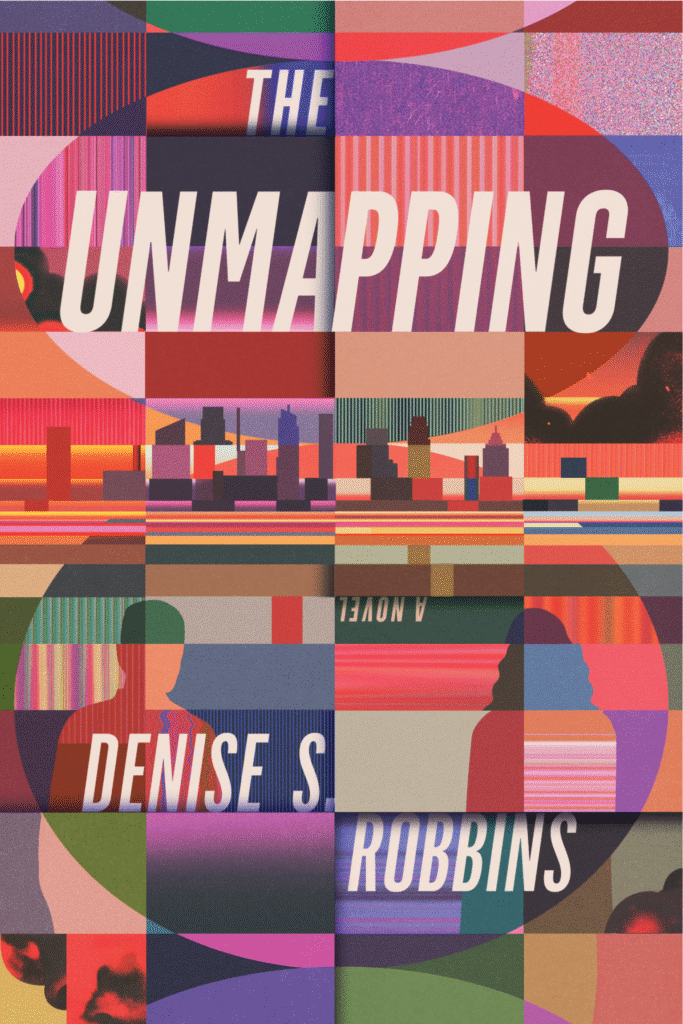
A mysterious phenomenon called ‘the unmapping’ causes city streets and neighborhoods to entirely rearrange each day, leading to broken down power grids and other such chaos. Our two main characters, Esme Green and Arjun Varma, work in the New York City Emergency Management Department; Arjun is in love with Esme, but Esme has a fiancé, who disappears on the first day. The book is about climate change, about disasters, and ultimately about humanity. Also, lucid dreaming cults.
Which character did you most enjoy creating? Why? And, which character gave you the most trouble, and why?
I loved writing from Arjun’s perspective. He tries so hard—at his job, at friendship, at love—and fails in ways that are endearing to me and generally brings levity to this disaster story with his particular brand of neuroticism.
As for the one that gave me trouble, each chapter features a brief perspective from an unnamed character, and the hardest one to write was one of these side characters known as ‘the wife’. Her husband is a disaster prepper yet he himself goes missing the first day, and the wife, meanwhile, stays locked up at home, full of fear, until she gets pulled into a strange lucid-dreaming cult. At one point, I realized I didn’t know very much about her—who she was before all this. That bothered me, the not-knowing. Then I realized this missing sense of self was actually perfect for the story—that’s the type of person who would get swept away in dangerous ideas. I thought her story was about fear, but I learned it was about a missing selfhood.
Tell us a bit about the highs and lows of your book’s road to publication.
Three years elapsed between when I finished the book and when I got the book deal. In that time, as I secured an agent and my agent pitched out The Unmapping, I kept writing madly, finishing two more books: a novel and a novella collection. When I heard that Bindery had put in an offer to publish The Unmapping, it was both a high and a low, because I went back to my draft and realized how much I had changed as a writer, and how much I wanted to change in this book. I’d really grown in three years! Luckily, they were responsive to my wishes to make some pretty massive edits, which were in line with what they wanted, too, so I said yes, then embarked on an utterly insane two months of rewriting. It was the hardest I’ve ever worked in my life, and very difficult, but also wonderful, with my mind always at least one foot in the dreamscape of the novel. Since then it’s only been high after high, working with an amazing team on editing, choosing the cover, and everything else that goes into turning a book from words on a page to a physical reality.
What’s your favorite piece of writing advice?
I am a diehard reader of George Saunders’s Substack, Story Club. In many of his essays he talks about the importance of finding and following the energy of a piece. Basically, when you read back what you wrote, what is it that gives off little sparks? Follow that. Let that energy lead the story. Take it as far as it can go.
My favorite writing advice is “write until something surprises you.” What surprised you in the writing of this book?
Writing this story involved discovery on every level. In a broad sense, when I was first working on this years ago, I didn’t realize I was writing a slanted analogy of climate change. I work in climate change advocacy, but considered my fiction as an escape from reality. Nope. It’s a disaster story very much about our own reality, even as it’s based on an unreal premise, and once I realized this, a lot clicked into place. On a smaller scale, when I was reviewing the book for copy edits I laughed out loud at a joke I’d included in the penultimate chapter—one I’d completely forgotten about. I took that as a good sign that I’d created characters with a life of their own.
How did you find the title of your book?
I initially called it “Sidewalk n.” I graduated undergrad with a degree in statistics, so this is a super nerdy math reference, because in statistics, instead of solving for “x,” you work with “n,” which is the number of observations in your sample. The idea was that if all the sidewalks rearrange (along with everything else), the one you’re looking at is “n”: it could be anything. Also, the name sort of rhymes with “sidewalk ends.” My husband also loved this title because he’s also a big math nerd, but I secretly knew it was too esoteric, that no one would get it, and right there on the first page people were talking about cities becoming “unmapped,” so it just became obvious that I should name it after that.
Interview with Lori Ostlund
reprinted with permission from www.workinprogressinprogress.com
Give us your elevator pitch: what’s your book about in 2-3 sentences?
The nine stories in this collection explore class, identity, loneliness, and the specter of violence that looms over women and the LGBTQ+ community. For personal reasons, I spend a lot of time with characters who try—and often fail—to make peace with their pasts while navigating their present relationships and notions of self. I often say that I write sad, funny stories, and I think that is true of this collection.
Which story did you most enjoy writing? Why? And which story gave you the most trouble, and why?
The answer to both questions is the same: the final story, which is a short novella entitled “Just Another Family,” gave me the most trouble and the most pleasure, probably for the same reason. That is, when you struggle for a long time with a story, as I did with this one, the pleasure of finally figuring it out is considerable. I don’t know when I started the story, but my records indicate that I got my first rejection in 2015. I kept rewriting and sending it out, and it kept getting rejected. I set it aside finally for around five years, and when I returned to it in late 2022, the voice just kicked in and pulled me along, and the story nearly tripled in length. In the process, the story became more hopeful, the humor darker, the main character more dynamic.
Tell us a bit about the highs and lows of your book’s road to publication.
During the pandemic, my former agent went out with a novel that was not quite ready. She was struggling with the pressures of the pandemic, as we nearly all were, and the submission process fell apart. We had always had a good relationship, so it was with some sadness that I parted ways with her. By this point, I had stopped writing, a fallow period that lasted a couple of years. I wondered whether I would ever write again, but then one day something turned back on, and I sat down at my desk and opened up the novella that I mentioned above. I wrote several more stories, and these combined with stories that I had written and published in journals earlier formed the basis of ARE YOU HAPPY?, which meant that I found myself in the awful position of having to query agents with a story collection. I was lucky enough to secure representation by an agent I had long admired. The process of selling the collection in some ways went smoothly, and in other ways was stressful as hell. I got an offer from Emily Bell, whom I had nearly worked with on my last book. Since then, she had moved from FSG to Zando, and shortly after I accepted the offer for a two-book deal, she moved to Astra House, ultimately taking me with her. There were lots of twists and turns along the way, but that is the tame version.
What’s your favorite piece of writing advice?
Kurt Vonnegut’s advice to write for an audience of one. The advice, on the surface, seems counterintuitive, but the most unusual voices—which is what I am always drawn to—details and observations evolve out of this advice, I think. In my case, if my wife—who is my first and usually only reader—laughs or understands the nuance, I go with it.
My favorite writing advice is “write until something surprises you.” What surprised you in the writing of this book?
Oh, lots of things surprised me, but one of the things that surprised me only later, when a reader pointed it out during the galleys process, was that there were lots of cats in the book and they were all named Gertrude. I have never had a cat named Gertrude, but I thought it was a funny name for a cat, I guess, and somehow the joke just kept getting retold.
How did you find the title of your book?
When I submitted the book to my now agent during the querying process, I had tentatively titled it JUST ANOTHER FAMILY, which was the name of the novella. The title works for the novella, but felt flat as a book title, not memorable. Another story was entitled “The Peeping Toms,” and I had toyed with that as a title also, since some of the stories deal with themes of voyeurism and being or feeling watched. When my agent and I had our first conversation about the book, he said, “Why not call it Are You Happy?” That was the name of another story, yet somehow I had never considered this as a title, but as soon as Henry said it, I knew that this was the title.
Inquiring foodies and hungry book clubs want to know: Any food/s associated with your book?
In “Clear as Cake,” several of the scenes take place in a dive bar that I spent a lot of time in during college, and the only food available came from a huge jar that sat on the counter. It was filled with pickled gizzards, which I occasionally sampled. In the story, I went with pickled eggs.
Interview with Martha Anne Toll
reprinted with permission from www.workinprogressinprogress.com
Give us your elevator pitch: what’s your book about in 2-3 sentences?
Duet for One is a lush and rewarding love story that follows the journey from grief to love within the world of classical music.
Which character did you most enjoy creating? Why? And which character gave you the most trouble, and why?
I most enjoyed creating three members of the supporting cast. The first is Thaddeus, a cellist who looks and sounds more like a lumberjack. Thaddeus is a person who calls it like it is. He’s an important counterweight to Adam Pearl, as Adam pushes through/and avoids grief following his mother’s death.
I also loved fleshing out Yvette, a professor of Caribbean studies at Penn who is humorous and grounded, in contrast to Dara’s tendencies toward seriousness and self-absorption. The same is true for Dara’s old friend Lydia, a fierce pianist whose cynicism masks a compassionate person whose life is filled with struggle.
I have worked hard to bring Adam Pearl to the page. Over time, as he’s moved to center stage, it’s been a challenge to render him with nuance. He’s a gifted violinist, who needs to know himself a lot better. He can be angsty but also kind and generous. He’s conflicted, like all of us.
Tell us a bit about the highs and lows of your book’s road to publication.
This book took twenty years to get born. There were a lot of lows. Too many rejections to count, including an agent in the distant past. Highs include my yearly revision of Duet for One, a book that is close to my heart and that has grown and thickened with time. Another high has been trying to render music on the page, which will always be a failing proposition, but brings me great joy!
What’s your favorite piece of writing advice?
Get your tush in the chair and ignore all writing advice.
My favorite writing advice is “write until something surprises you.” What surprised you in the writing of this book?
I don’t know if it counts as a surprise, but if you would have told me in 2004 that this book was going to be published in twenty years, I would have been surprised on all fronts—that it was getting published and that it would take so long!
How do you approach revision?
For me, revision is the heart of writing. Everything happens there. I revise a lot as I am in process. I do multiple entire-book revisions where I review character arcs, nuance, interior life, plot, dialogue, and structure structure structure. My last revision is the one where I put every word under a microscope to ensure it has a purpose. Otherwise, that word has to go!
Interview with Suzanne Cleary
reprinted with permission from www.workinprogressinprogress.com

We don’t expect an elevator pitch from a poet, but can you tell us about your work in 2-3 sentences?
I usually write a narrative poem that, along the way, dives into single moments and/or explores associations that arise as I write. I like poems that think-on-the-page, and find those especially fun to write.
Which poem/s did you most enjoy writing? Why? And which poem/s gave you the most trouble, and why?
I most enjoyed writing “For the Poet Who Writes to Me While Standing in Line at CVS, Waiting for His Mother’s Prescription” because the subject welcomed a wide range of material and emotion. It’s about those early months of the COVID quarantine, when I compulsively surfed the Internet for both information and distraction, which is how I got to reference both the royal family and snack food. It’s also one of the poems I most enjoy having written because it’s found a wide readership, especially in England and Ireland.
I most struggled with writing “At the Feet of Michelangelo’s David.” The ending originally included lots of facts about the statue’s long trek to the museum, and lots (and lots) of speculation on my part as to what that might have looked like to passersby. Eventually, I realized I needed to look again at the statue itself in order to find the poem’s final lines.
Tell us a bit about the highs and lows of your book’s road to publication.
First, the low: For four years I submitted The Odds manuscriptto all the best publishers and competitions, where sometimes it was a finalist or otherwise near-miss. I found this mostly encouraging, until the day that my dream publisher told me that The Odds had lost publication to one other book, essentially because my poems “sound too much alike.” This observation felt damning, and too accurate for comfort. So I gave upon The Odds. I turned my attention to a new-and-selected manuscript I’d begun a few years earlier; maybe that manuscript, instead, might be my fifth book. When, slowly and grudgingly, I returned to The Odds, I reordered the poems to highlight variation of subject, length, and form. I added poems I originally thought hadn’t fit. When Jan Beatty selected the revised The Odds as winner of the 2024 Laura Boss Narrative Poetry Award, I’d won the jackpot! Not only did a fabulous and accomplished poet select my work, but I had “grown as a poet.” Ultimately, the struggle was good for me and for my book. As a bonus, that new-and-selected manuscript is nearly complete, which also feels good.
What’s your favorite piece of writing advice?
“Follow the poem, don’t lead.” I’m all about discovering as you write, about welcoming unforeseen ideas, associations, images, sounds. If I begin a poem knowing where the poem will end, the poem hardly feels worth writing; it feels restricted to the conscious mind, closed to the subconscious. Discoveries add resonance and depth to the poem, and—really important for me—add fun to the writing process.
My favorite writing advice is “write until something surprises you.” What surprised you in the writing of this book?
Every poem includes something that I did not foresee, but, overall, I didn’t expect that the pandemic, either overtly or covertly, would appear so often in this book. I knew that I’d write about the passing of time, since I often do, but with The Odds I found myself feeling as if I were a historian, responsible for recording the quarantine years.
How did you find the title of your book?
I like a short book title because it’s easy for readers to remember. The Odds is my fifth full-length poetry collection and the odds were against this happening. The odds were against my living this long. Not coincidentally, I am drawn to writing about odd things, things that are unlikely subjects for poems. Also, I love the iamb, love it.
Inquiring foodies and hungry book clubs want to know: Any food/s associated with your book? (Any recipes you might share?)
A figure in one of the poems eats a granola bar. Salted cashews also appear. As for recipes, sorry. I’m better at recommending restaurants.
*****
New issue on its way…