Tag Archives: #writinglife

Interview with Bernadette Geyer

reprinted with permission from www.workinprogressinprogress.com

We don’t expect an elevator pitch from a poet, but can you tell us about your work in 2-3 sentences?

The poems in What Haunts Me examine what is passed down through families and societies – what is inherited, what we take with us as we age, and what we leave behind. How do we process and come to terms with the centuries that have preceded us? The collection interrogates how ancestries and beliefs serve as sparring partners within us as we forge and discover our individual roles in shaping our own lives.

What boundaries did you break in the writing of this book? Where does that sort of courage come from?

I broke the mental boundary of believing that my writing path would be linear: I would work on one book, then move on to the next book, then move on to the next book, and so on. Most of the poems in this collection were actually written before the poems that appeared in my first collection, The Scabbard of Her Throat, which was published in 2013. Some of the poems in What Haunts Me are more than 20 years old. I think this change in perspective helped me to allow myself to work on more than one project simultaneously.

I don’t know if I’d call it courage, but more of an acceptance of reality. I don’t put off working on a new project idea simply because I am in the middle of something else. In fact, I use this to my advantage – when I’m stalled in one project, I switch to a different project. That way, I am at least making progress with something.

Tell us a bit about the highs and lows of your book’s road to publication.

When I first started sending the manuscript out in its earliest form as The Inheritance back in 2003, it was a finalist and semi-finalist for several book contests. However, as the years went on and I tinkered with it – adding new poems, removing others, and changing the title multiple times – I think the manuscript lost its way.

Following the birth of my daughter in 2005, I had started writing poems linked by a more cohesive theme that really came together over the course of a few years, and I started sending out that manuscript (The Scabbard of Her Throat) in 2009. It was then that I gave up pitching the first manuscript and set it aside.

Following the publication of The Scabbard of Her Throat in 2013, I moved with my family to Germany. My writing expanded into travel articles, essays, and short fiction. I translated several business books, as well as poems by German poets. I didn’t really look back at my first poetry manuscript until about 2022, when I really reworked it and settled on a new title. I began submitting it in earnest in 2023 – and only to publishers who offered a free open reading period. April Gloaming Publishing was one of the indie presses I sent an excerpt to that year. They requested the full manuscript for What Haunts Me in February 2024 and made me an offer four months later.

The whole experience taught me that there was something the original manuscript had been lacking, and that I needed the long break to really find the order and structure – and title – that the book had been seeking all along.

What’s your favorite piece of writing advice?

My favorite piece of writing advice is actually the last two stanzas of the poem “Berryman,” by W.S. Merwin.

I had hardly begun to read
I asked how can you ever be sure
that what you write is really
any good at all and he said you can’t

you can’t you can never be sure
you die without knowing
whether anything you wrote was any good
if you have to be sure don’t write

It’s a little bit depressing, but also freeing at the same time. And so I keep writing.

My favorite writing advice is “write until something surprises you.” What surprised you in the writing of this book?

I honestly did not realize how many ghosts and spirits would show up in it! As I was reading through the final editing rounds with my publisher, I was also struck by how many of the poems were inspired by photographs and how prominently those images imprinted themselves in my mind.

How do you approach revision?

I love the editing process and am always surprised by how many writers believe that if it doesn’t come out perfect the first time, they need to throw it out and start over. I love trying out different word combinations to see what kind of vibe or nuance they bring to the poem. I also love researching word origins and alternate meanings to see how a single word can serve to emphasize a theme or hint at a subversive undercurrent. I also love writing an ending over and over and over dozens of different ways – it seems to break down the inner censor and help me find a totally unexpected image or turn.

Interview with Kerry Neville

reprinted with permission from www.workinprogressinprogress.com

Give us your elevator pitch: what’s your book about in 2-3 sentences?

Momma May Be Mad: A Memoiris an inventive and striking memoir about motherhood, madness, and the grace of second and third chances. Kerry Neville shares the story of how she was caught in the perfect storm of bipolar disorder, anorexia, and alcoholism when her children were young and her marriage failing and how she found her way back to joy and hope. Electric shock therapy, hospitalizations, and even an exorcism were desperate, if failed, lifelines. But even in that dark chaos, she held fast to an abiding belief in love and fought to regain her own life and her life with her children.

What boundaries did you break in the writing of this memoir? Where does that sort of courage come from?

The easiest way to answer this question is to quote the opening of the memoir:

“How do you write a memoir when you can’t remember? And how then do you honor and unravel that tangle of time?…Electric Shock Treatments erased years of my linear memory. What remains? Unreliable chaotic approximation. Incomplete jerry-rigged record. Splinters and fragments: a fat file of doctors’ shorthand notes and coded diagnoses, Social Security Disability Insurance legalities, journal entries composed in situ, email correspondence with therapist, and friends who fill in the blanks.

“External documentation functions with the specious authority of a third-person limited narrator. Even my journals, though read as if extemporaneous synchronous records, are always belated after-accounts. We don’t live in time’s flow but in time’s lag. Our brains create a coherent understanding of the world from stimuli that travel at different times and speeds. Auditory processing is faster than visual processing. Starter pistol rather than flash of light. The brain waits for the slowest information to arrive before “making sense” of “now.” An eighty-millisecond lag between what is happening and what we understand is happening.

“When I read my medical records and journals, scroll through photos, and listen to my friends recount who I was and what I was doing and saying and how I was lying and dying and trying and not trying to get myself into sensible order? That “I” stands in strange, estranged proximity. I cast forwards and backwards through lost and found time, never able to catch up. My unruly IIIIIIIIII’s arrive at different times and speeds to these pages.

“I’ve tried and tried to write this happened and then this happened and then this happened and now it’s done, but each attempt was a failed mouth-to-mouth resuscitation of my corpse on the dissection table, so I ditched linear plot-forward-in-time.”

Additionally, the memoir is divided into three sections according to St. Augustine’s understanding of time as he outlines in Confessions: “present of things past, memory; present of things present, sight; present of things future, expectation.”

Courage: There was no other way to write this story—except to find a way to represent how I—we—construct ourselves as changing selves every day, how we revise and rerevise our stories of how we have arrived in this moment now. The memoir is an attempt at simultaneity: becoming and unbecoming at the same time. So, linear plot can’t do that on the page with its neat, progressive timeline. 

Tell us a bit about the highs and lows of your book’s road to publication.

My agent sent the manuscript out to the big presses, and I received positive feedback but…ultimately, no, no, no, no. I knew the structure would be a difficult sell—but memoirs are, anyway. My agent persevered because she believed the book would find a home, the right editor, at the right time. I know how fortunate I am to have an agent willing to keep on keeping on with the manuscript. Eventually, Kim Davis and her editorial team at Madville Publishing responded with a quick (!) and enthusiastic yes. The right home, the right editor, the right time!

What’s your favorite piece of writing advice?

Write from your me-ness”—you don’t have to be decorous, polite, modest, or measured. Write out of your fierceness, unruliness, and daring. Disturb the universe. (Fyi: it took me far too long to realize writing, at least early draft writing, is ferocious and feral. Late draft revision is meticulous and exacting.)

My favorite writing advice is “write until something surprises you.” What surprised you in the writing of this book?

What surprised me was how much I learned about what is beyond me—that is, research that brought the world and all its complicated wonders inside my understanding of self-as-world-on-the-page. Biology, neuroscience, anatomy, philosophy, botany, history, geology, religion, mythology!

How did you find the title of your book?

The title is the title of a long-retired blog I kept when I was in my dark, desperate times. Writing that blog about my mental health complications helped me to understand that I wasn’t the only momma, the only human being going through the really effing hard stuff—I heard from many readers who connected to my story (if not to exact facts, then to the ebb and flow of despair and joy). I had a running list of possible titles for the memoir but I kept coming back to Momma May Be Mad—there’s the sound of the M’s, but, too, there’s the uncertainty. Not “maybe” but “may be”—or may not be. And maybe it’s all of is: motherhood, madness, hysteria, wandering wombs, one body creating another body, body-at-hand and body-of-work. We are shapeshifters, phoenixes rising again and again from the ash. What are the forces at work on the inside and on the outside that contribute to despair, give rise to joy, and allow us to redeem ourselves?

Interview with Barbara P. Greenbaum

reprinted with permission from www.workinprogressinprogress.com

Give us your elevator pitch: what’s your book about in 2-3 sentences?

Go Out Like Sunday and Other Stories is a collection of sixteen short stories, featuring a cast of characters facing moments of decisive change. From a bullied boy in high school, to a couple shopping for coffins, the folks in this book face betrayal, loss, violence, grief, and yearning while dancing with the joy of new directions.

Which story did you most enjoy writing? Why? And, which story gave you the most trouble, and why?

Of all the stories in the book, I enjoyed writing Park & Ride the most perhaps because that voice came to me so easily. I instantly could hear her. And yes – I too like pickup trucks – so I had a natural affinity. And she was just so much fun!

Several stories in the book took a while to develop. Midnight Swimmer was the most emotionally difficult because it was close to the bone. I left my home in New England after being in CT for almost fifty years. It took a bit to work to get to the psychic distance I needed to tell Cynthia’s story. 

Tell us a bit about the highs and lows of your book’s road to publication.

For me, the highs and lows collided. I found out the book had been accepted for publication by Main Street Rag the Tuesday after my husband died unexpectedly during an operation. While I was thrilled that I would be working with Scott on the book, my husband’s death stopped me for a while. The last story in the book, The Midnight Swimmer, was the last story he ever read for me. I knew the story wasn’t yet finished, yet it took me almost six months after he died before I could work on it again. I was lucky enough to attend the Writers in Paradise Workshop in St. Petersburg with Stewart O’Nan specifically to get help with it. It paid off. However, it would be another year before the book felt finished to me and we could go to press. Main Street Rag‘s publisher Scott, and his wife, Jill, were incredibly understanding about my situation and waited for me. I will be forever grateful for that.

When the book finally appeared, with the cover designed by my artist friend Randy Gillman, I felt just joy that it finally happened. There is no better feeling that seeing your work in print and so beautifully done.

What’s your favorite piece of writing advice?

This one is simple for me though there are days when I don’t get there. Write every day. When I was working full time, I somehow convinced myself that I had to find an hour or two to write successfully. Then, while moaning to a friend that I could never find the time, he looked at me and said – fifteen minutes. From then on, whether I had to set the clock a bit earlier, I would write every day for at least fifteen minutes. Most often I would write before work with my first cup of tea. But I was almost immediately amazed at how much I could do in such a short period of time. And even when I had to stop, the stories and voices would often spill over into the day and those thoughts would add to the story for the next day. This helps me stay in that creative stream.

My favorite writing advice is “write until something surprises you.” What surprised you in the writing of this book?

I hadn’t realized until the collection came together how much I enjoyed playing with voices and genres. Each story in the book is very different and yet I can’t help but really like these folks. I’m so glad I got to spend time with them.

How did you find the title of your book?

I am very bad at titles. The title story of the book had a different title originally. (It’s honestly too embarrassing to name here.) The editor of the Louisville Review wrote to me to say she loved the story, hated the title. I confessed my title deficits, and she suggested Go Out Like Sunday. I loved it immediately. When I was searching for titles for the collection, I knew immediately that’s what it would be. It just felt right.

Interview with Helen Fremont

reprinted with permission from www.workinprogressinprogress.com

Give us your elevator pitch: what’s your book about in 2-3 sentences?

Outside the Lines is a queer love story between a young public defender and a married mother of two, who meet in a writing workshop in Boston in the 1980s. Drawn together by surprisingly similar family secrets, hidden identities, and a deep connection to the Holocaust, they fall in love. Subsequently, a terminal illness changes and intensifies their relationship with each other and with their families.

What boundaries did you break in the writing of this memoir? Where does that sort of courage come from?

By the time I got around to writing this memoir (my third), I’d inadvertantly become something of an expert at family demolition. After my first memoir (which I thought was pretty tame) was published, my family disowned me and declared me dead.

It took twenty years for me to get up the ovarian fortitude to write a second memoir, in which I told the rest of the story, including many of the gory details I’d tactfully left out of the first book. (My parents had died in the meantime.)

I think the need to write these stories as memoir stems from the need to claim one’s own voice and one’s own truth, when the writer’s reality has consistently been denied or disavowed. Family secrets manipulate and mess with one’s sense of self, which is why they are so potent.

In my new memoir, Outside the Lines, the two main characters died many years ago, so I feel a little less anxious about writing my story as it relates to them. Once again, I’ve changed names and details, and omitted scenes in order to protect the privacy of surviving family members. But of course, I worry a great deal about how family and friends will feel. I don’t think it’s particularly “courageous” to write memoir; I think it’s compelled by a need to speak your truth when it has been consistently denied.

Tell us a bit about the highs and lows of your book’s road to publication.

I’ve wanted to write this book for a long time, but apparently I wasn’t ready to dive into the material until a few years ago. Writing the scenes set loose a flood of memories, both exhilarating and agonizing. So as with all writing, the highs and lows are always built right into the daily work. I write something one day and think it’s brilliant; I look at it in the morning, and it’s turned to garbage.

Perhaps my greatest high with this book came from my writer buddies, who never cease to amaze and inspire me with their own poetry and prose, and who never pretend something is working when it’s not. Every time we’d get together to talk about our work, I came away on fire to fix the things they’d suggested, and excited about the whole impossible project of bringing a bunch of words on the page into a completed book for publication.

It was also thrilling when my agent (whom I adore and revere) read the manuscript and liked it. Her belief in this little book was so powerful, it made the first slew of rejections from publishing houses less painful. Of course, when the next slew of rejections came in, and the ones after that, my mood descended  in direct proportion to the rise in rejections. Needless to say, it was wonderful to find a publisher I admired who liked this book enough to want to publish it. Working with her and her team has been a blast.  

What’s your favorite piece of writing advice?

“It’s all draft until you die.” The poet Ellen Bryant Voigt said that. Just conjuring her name makes me happy. She is the founder and mastermind of the Warren Wilson MFA Program for Writers, my alma mater. Ellen is all about process, all about doing the work, without letting yourself get distracted by anything else—the market or the critics, or your own inner judge. She reminds us that we can keep fiddling with a draft as long as we like, long after it’s been published, or long after we’ve given up on it. Writing is not just our work; it’s our play, it’s what reminds us we’re alive.

My favorite writing advice is “write until something surprises you.” What surprised you in the writing of this book?

I was surprised when I wrote a sentence I liked for more than twenty-four hours. And I was surprised—well, more like embarrassed—to discover how incredibly immature and clueless I was at the age of thirty. It’s sort of amazing to see the effect that thirty-plus years of perspective had on my memories and feelings—even sensory perceptions—that came back to me when I was writing. So as you see, self-absorption really does have its own rewards.

How did you find the title of your book?

I am terrible at titles. Prolifically terrible. I must have scribbled down hundreds of titles, one worse than the other. For a while, I was convinced that if I just found the right Leonard Cohen lyric, I’d have my title.

Fortunately, my wife pretty quickly came up with the title, Outside the Lines. I liked it immediately, and then went on to brainstorm another couple hundred awful titles. But I kept coming back to this one, because it’s about coming out, and it’s about the complications of navigating a life outside the norm. The title lasted through all my mood changes, so it’s a keeper. (So is she.)

Interview with Sheri Joseph

reprinted with permission from www.workinprogressinprogress.com

Give us your elevator pitch: what’s your book about in 2-3 sentences?

At a remote Southern university in the late 1980s, student Leah Gavin becomes obsessed with a classmate’s unexplained fall from the bell tower, then begins to realize the mystery might implicate people close to her. It’s a literary thriller and heartfelt coming-of-age story with a kick-ass mixtape soundtrack.

Which character did you most enjoy creating? Why? And which character gave you the most trouble, and why?

My most enjoyable character, a frat boy named Quinn Cooper, was intended to have only a minor role in the story: a sort-of friend Leah doesn’t trust who has some information to deliver. But he showed up with this outsized personality and rapacious desires and a vestigial conscience, and he just kept demanding more space, until he became my Iago—which, in John Updike’s terminology, is less the villain than the character who pushes all the other characters around. He completely took over the book, in large part because he was so much fun to write. I had the most difficulty with Leah, who is not me but is very often standing in my place, within my emotional experience. So it was hard to keep her vividly and precisely herself.

Tell us a bit about the highs and lows of your book’s road to publication.

The less said about that, the better! My agent sent it out to editors for years, but what happens to most writers who have published a few books without selling any great numbers is that no one not already attached to the writer will read the book. Editors just let the manuscript sit on their desk until they have the pressure of another offer to compel them to pick it up. Even if they do read it and love it, “the numbers” don’t support taking the risk. So I took the book to a wonderful small press, Regal House, which has more freedom to avoid the really destructive business model of bigger publishers and can just publish good books.

What’s your favorite piece of writing advice?

As a teacher of writing, I have a few hundred go-to favorites! Most of them require a whiteboard and a weird approximate drawing of what a story looks like inside my head, just as a starting point. Maybe that’s more instruction than advice. The best advice I’ve ever received about my own work was “Be more forthcoming.” That’s one I’m often repeating to students who overvalue mystery. And my evergreen, bedrock advice is read. Reading is the best teacher. Read widely at the level of quality you hope to achieve in your own work.

My favorite writing advice is “write until something surprises you.” What surprised you in the writing of this book?

I’m with you on that advice! Almost everything I write surprises me because I start from a compelling situation I don’t fully understand, then I write to discover what’s going on. In this book, that included about 80% of the central mystery. Also, most of Leah’s love life and several key friendships got pulled in directions I did not expect. And some of my favorite scenes came from just asking myself a question mid-draft like “What’s Leah’s most intense relationship with a professor?” then writing toward that.

What’s something about your book that you want readers to know?

The campus setting, Rockhaven, is very closely based on my alma mater, as will be obvious to anyone who knows and loves Sewanee. I renamed everything only to give myself the smallest room for fiction. My goal was to write a memoir of emotion and place, a novel in which everything is true except all of the characters and all of the events. Rockhaven as a place is so very Sewanee in the 80s that I worry it’s going to be hard for some alums to avoid thinking it’s a code pointing to real people and events. So I’m here to declare that 1) none of this happened and 2) (almost) no one I know is in this book! The exceptions are my late, great professor Douglas Paschall, who is dropped into the book as I remember him with only a name change, and two of our presumably late horses, Jojo and Matchless, who are playing themselves.

Interview with Lacey N. Dunham

reprinted with permission from www.workinprogressinprogress.com

Give us your elevator pitch: what’s your book about in 2-3 sentences?

Deena Williams is an outsider with a secretive past who will risk everything—including her life—to fit in. 

At secluded Bellerton College, Deena is desperate to join a powerful clique of wealthy girls anointed the Belles. She’s welcomed into their group with the gift of a black velvet ribbon, and the comfortable life she’s always dreamed of is within reach. 

But Bellerton hides a sinister history, and soon Deena is caught in a web of secrets, lies, and dangerous games in this chilling Southern gothic dark academia debut mashup of THE SECRET HISTORY, BUNNY, and HEATHERS.

Which character did you most enjoy creating? Why? And which character gave you the most trouble, and why?

I loved writing so many of my characters, it’s hard to pick! Ada May was a character who conjured herself, which is appropriate to her character’s genteel sinisterness. I hadn’t originally envisioned her in the book, but she quickly became the foil to my protagonist, Deena, and with her presence the book became a better, more interesting story. I also loved writing Fred, an iconoclastic young woman who is utterly unapologetic about who she is. Fred might be my favorite character in the novel.

Mary’s character was more challenging to write than I expected. I knew her background and her role in the story’s plot, but figuring out how to put her on the page while revealing the bits of mystery surrounding her at the right moments was difficult.

Tell us a bit about the highs and lows of your book’s road to publication.

Publishing is a journey of highs and lows! I’m very lucky and privileged to have landed with an editor, the terrific Laura Brown, who understood my vision of the book and worked with me to elevate it to the greatest version of itself. And Atria has been terrific, the whole team there has been wonderful to work with.

One aspect of the publishing journey that isn’t talked about as much as the agent query process is the submission process. Writers are immensely focused on getting an agent—an important thing, especially if you’re interested in publishing with Big 5 and prestige indie presses like Graywolf or Algonquin—but for every book an agent has sold, they have five books from clients whose died on submission. I was, again, very lucky that this didn’t happen to The Belles—but it could have!

I think it’s important for writers to know that the journey doesn’t stop with getting an agent. There are no guarantees in this business. The journey continues for a long time beyond the agent, and it’s an emotionally challenging and difficult journey with no security at any point. Your book, and your career, face numerous hurdles every step of the way. And again with the next book. And again beyond that.

What’s your favorite piece of writing advice?

Stay connected to your creativity. The writing is yours; publishing is a business, and it’s a brutal one. There’s so much romanticization around book publishing. I encourage writers to stay grounded. Write for you, first and foremost. Not towards trends. Not towards what you think you “should” be writing. Not to the critics in your head. Not to the readers in your head. Write for you.

Then, worry about all the other stuff later. It becomes all-consuming and gets in the way of the creative work.

My favorite writing advice is “write until something surprises you.” What surprised you in the writing of this book?

I have a drawer novel that I labored over for a decade. That novel was a book I wrote out of shoulds. It was not a book I wrote out of my own interests or obsessions, though I didn’t recognize it at the time. When I decided to write The Belles, I had two rules for myself, and the first one was that I wanted to write a book I would enjoy reading. A book that was wholly composed of things I love. What surprised me most was how much I enjoyed the actual writing process of The Belles once I followed my own obsessions, tastes, and interests rather than someone else’s ideas of a book.

How did you find the title of your book?

I’m terrible at titles! I think most writers are. The working title for The Belles was awful for a long time. I can’t remember when I decided on The Belles, but it’s perfect. It’s a title that references the group, and the consequences of conformity are a major theme in the book. The novel is set in Virginia, and the word “belles” is evocative of Southern Belles, a deeply complicated heritage that the young women in my book would be emerging from. The word “belles” also means “beauty” in French, and toxic white femininity is one of the core themes of my novel.

Inquiring foodies and hungry book clubs want to know: Any food/s associated with your book?

The young women of Bellerton College love drinking sweet iced tea on the shaded porches of their dormitories. I personally can’t stand sweet tea—I drink unsweetened tea only.

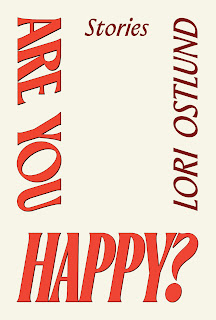
Interview with Lori Ostlund

reprinted with permission from www.workinprogressinprogress.com

Give us your elevator pitch: what’s your book about in 2-3 sentences?

The nine stories in this collection explore class, identity, loneliness, and the specter of violence that looms over women and the LGBTQ+ community. For personal reasons, I spend a lot of time with characters who  try—and often fail—to make peace with their pasts while navigating their present relationships and notions of self. I often say that I write sad, funny stories, and I think that is true of this collection.

Which story did you most enjoy writing? Why? And which story gave you the most trouble, and why?

The answer to both questions is the same: the final story, which is a short novella entitled “Just Another Family,” gave me the most trouble and the most pleasure, probably for the same reason. That is, when you struggle for a long time with a story, as I did with this one, the pleasure of finally figuring it out is considerable. I don’t know when I started the story, but my records indicate that I got my first rejection in 2015. I kept rewriting and sending it out, and it kept getting rejected. I set it aside finally for around five years, and when I returned to it in late 2022, the voice just kicked in and pulled me along, and the story nearly tripled in length. In the process, the story became more hopeful, the humor darker, the main character more dynamic.

Tell us a bit about the highs and lows of your book’s road to publication.

During the pandemic, my former agent went out with a novel that was not quite ready. She was struggling with the pressures of the pandemic, as we nearly all were, and the submission process fell apart. We had always had a good relationship, so it was with some sadness that I parted ways with her. By this point, I had stopped writing, a fallow period that lasted a couple of years. I wondered whether I would ever write again, but then one day something turned back on, and I sat down at my desk and opened up the novella that I mentioned above. I wrote several more stories, and these combined with stories that I had written and published in journals earlier formed the basis of ARE YOU HAPPY?, which meant that I found myself in the awful position of having to query agents with a story collection. I was lucky enough to secure representation by an agent I had long admired. The process of selling the collection in some ways went smoothly, and in other ways was stressful as hell. I got an offer from Emily Bell, whom I had nearly worked with on my last book. Since then, she had moved from FSG to Zando, and shortly after I accepted the offer for a two-book deal, she moved to Astra House, ultimately taking me with her. There were lots of twists and turns along the way, but that is the tame version.

What’s your favorite piece of writing advice?

Kurt Vonnegut’s advice to write for an audience of one. The advice, on the surface, seems counterintuitive, but the most unusual voices—which is what I am always drawn to—details and observations evolve out of this advice, I think. In my case, if my wife—who is my first and usually only reader—laughs or understands the nuance, I go with it.

My favorite writing advice is “write until something surprises you.” What surprised you in the writing of this book?

Oh, lots of things surprised me, but one of the things that surprised me only later, when a reader pointed it out during the galleys process, was that there were lots of cats in the book and they were all named Gertrude. I have never had a cat named Gertrude, but I thought it was a funny name for a cat, I guess, and somehow the joke just kept getting retold.

How did you find the title of your book?

When I submitted the book to my now agent during the querying process, I had tentatively titled it JUST ANOTHER FAMILY, which was the name of the novella. The title works for the novella, but felt flat as a book title, not memorable. Another story was entitled “The Peeping Toms,” and I had toyed with that as a title also, since some of the stories deal with themes of voyeurism and being or feeling watched. When my agent and I had our first conversation about the book, he said, “Why not call it Are You Happy?” That was the name of another story, yet somehow I had never considered this as a title, but as soon as Henry said it, I knew that this was the title.

Inquiring foodies and hungry book clubs want to know: Any food/s associated with your book?

In “Clear as Cake,” several of the scenes take place in a dive bar that I spent a lot of time in during college, and the only food available came from a huge jar that sat on the counter. It was filled with pickled gizzards, which I occasionally sampled. In the story, I went with pickled eggs.

Interview with Michelle Herman

reprinted with permission from workinprogressinprogress.com

Give us your elevator pitch: what’s your book about in 2-3 sentences?

If You Say So is a set of true stories about loss and reinvention, longing, loneliness, friendship, community, and family. It’s also about grief, and the way it lives in the body—and joy, and the way it lives in the body too.

Which essay did you most enjoy writing? Why? And, which essay gave you the most trouble, and why?

“Enjoy” is such a funny word when it comes to writing! (Or is that just me?) I mean, if I’m not writing (something, anything), I feel pretty miserable, so just working on a new essay or story or novel is enjoyable by comparison (my paternal grandma used to say, if I complained about being bored and unhappy, “Go bang your head against the wall”—presumably to make me better appreciate the feeling of not banging my head against the wall—but I digress). Still, I guess I could say that the two essays I most “enjoyed” writing were the one called “Old House” (both because it required me to do research on the turn-of-the-twentieth-century house I’ve lived in for going on four decades—and research with a personal angle is one of my favorite things—and because I wrote it in the months directly following my retirement from full-time university professing, thus wrote pretty joyously all the livelong day) and the one called “On Balance,” because I wrote it very fast and with great certainty, clarity, and ease, which doesn’t happen all that often (and which, come to think of it, is a pretty meta thing to say about this essay).

The one that gave me the most trouble was the book’s final and title essay, “If You Say So.” I started writing it in the immediate wake of a close friend’s death, while still in the thick of dealing with it (not just my grief, but all of her belongings and everything else that a death leaves behind), which in itself made it hard to get my arms around (but I felt I had no choice—I had to write it, then and there; I feared that if I didn’t, my heart and brain would explode), but I also had to figure out what it was “really” about, which took a while and a bunch of drafts.

Tell us a bit about the highs and lows of your book’s road to publication.

I could tell a long version, full of heartbreak, but as I went on at such length in my answer to the last question, I’ll just say this, about the lows: My former literary agent read it and said, “Nope, can’t send out a miscellaneous essay collection! Nobody’s publishing them.” My current literary agent declined to read it at all (“What’s the point?”). And so I sent it out myself, carefully–agonzingly. The “high” in this road is having landed at Galileo Press, where working with my editor, Barrett Warner, has been a dream.

What’s your favorite piece of writing advice?

If you’re stuck, it’s most likely not a writing problem—it’s a thinking problem.

My favorite writing advice is “write until something surprises you.” What surprised you in the writing of this book?

I wrote each of these essays separately over a period of about five years. When I put them together—and especially when I read the final one in the context of the others—I was stunned to see the threads that ran through all of them and bound them tightly together. So, not a “miscellaneous collection” at all! When I revised them as a whole, now thinking of them as a whole, I kept that surprise in mind . . . and let myself be surprised along the way, all over again.

What’s something about your book that you want readers to know?

This book is a love letter: to my friend Judith—who used to say, “If you say so,” sweetly and utterly insincerely, whenever I said something she didn’t agree with or just didn’t want to hear (which was often)—and to the tight community of serious amateur dancers we were, and I still am, a part of; to my father, who looms as large in my life a decade after his death as he did for the six decades before it; to all the rest of my human family, as well as all the animals (the dog who was supposed to be mine, but who was singularly devoted to my father; the dog who was supposed to be my daughter’s, but was singularly devoted to me, and was my closest companion and only consolation after my father’s death; and all the others—including, most painfully, the pandemic-adopted puppy whose life story is at the heart of the essay “Animal Behavior”) I have considered family; the Victorian-era house that has come to feel like part of me; and, well, to be completely honest, just about all the other things and people that constitute the story of my life. (Except for a few things/people that it’s the opposite of a love letter to, like my high school boyfriend, or a love/hate letter to, like the cigarettes I smoked for fifteen years.)

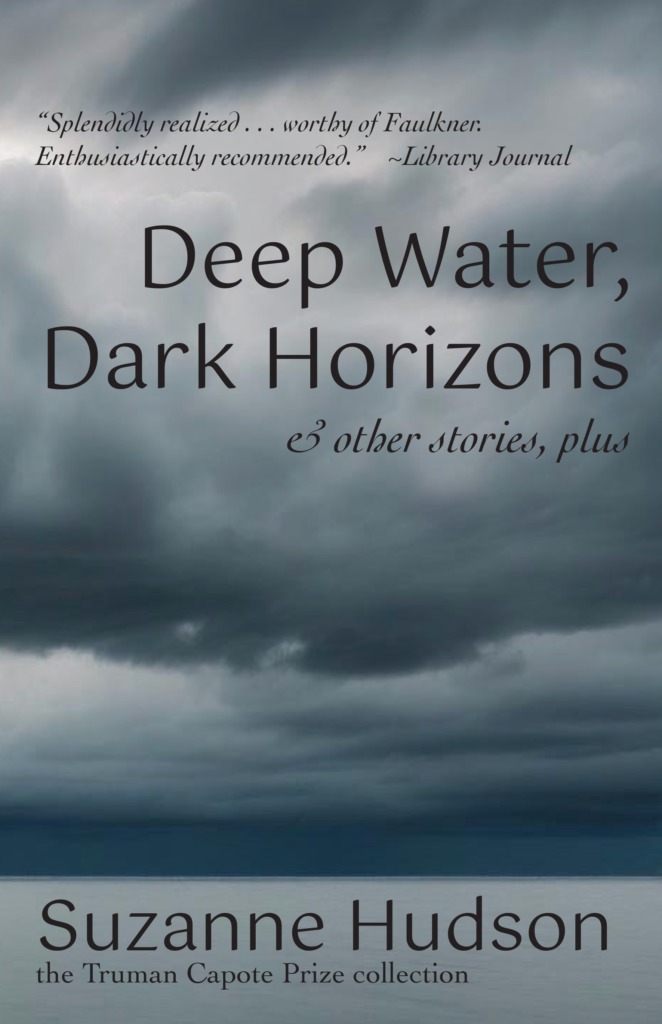
Interview with Suzanne Hudson

reprinted with permission from www.workinprogressinprogress.com

Give us your elevator pitch: what’s your book about in 2-3 sentences?

It’s a compilation, an abridged body of work, mostly short fiction—plus a few novel excerpts and a couple of essays. Subject matter ranges from the absurdly comical to the dark and despairing, with hope woven throughout. The publisher moved fast to get it out ahead of the February 2025 Truman Capote prize.

Which story did you most enjoy creating? Why? And, which story gave you the most trouble, and why?

“The Fall of the Nixon Administration” is the story I had the most fun writing, because the characters are so outrageous, eccentric and self-deluded. One in particular has the filthiest mouth and says over-the-top nasty, perverted things, purely for shock value. It’s liberating to write what you’d not dare to actually say out loud. Or would I? That story was so much bawdy fun that it grew into a comic novel (of the same title).  Note: it’s about a crazy dysfunctional family, not literally about Nixon, but set in 1974.

The most trouble? Well, since I dedicated the title story to my late brother, Wilson, who died of acute myeloid leukemia soon after working on beach cleanup after the Deep Water Horizon oil disaster, I needed the character based on him, Gary, to be drawn with care. I wouldn’t say it was “trouble” but I tried to be very mindful about it, and that was emotionally hard for me.

Tell us a bit about the highs and lows of your book’s road to publication.

Because I was informed about being the recipient of the Capote prize in November of 2024, and the award was to be presented to me at the end of February of 2025, the window for production was ridiculously small, requiring something like a miracle to get ‘er done. Since all of the work was previously published, editing wasn’t an issue (with a few exceptions), but design and all of the complexities related to that was . . . a challenge. The award itself was the high throughout the process. Those editorial exceptions—stories written back in the 1970s—were the lows, as looking at older work can be—was—mortifying and had to be carved up some—um, a lot. My Lord, the adverbs!

What’s your favorite piece of writing advice?

I’ve gotta go with that tired old saw, “write what you know.” And to steal from my husband, Joe Formichella, “If you can quit writing, do so.” A true writer can’t NOT write.

My favorite writing advice is “write until something surprises you.” What surprised you in the writing of this book?

How bad some of those old stories were! I hadn’t looked at them in ages, was in my 20s when I wrote them. I was surprised that I was glad I stepped away from writing for around 25 years (until 1999), because I was in dire need of life experience in order to have something to say.

What’s something about your book that you want readers to know?

I never hesitate to let readers know that my stuff ain’t for everybody. It’s pitch dark, with cockroaches skittering around the underbelly, mostly about folks living in the margins. It deals with domestic violence, depression, addiction, molestation, racism, all that mess that festers under the scab of southern culture. But I have fun, too! And I hope the funny comes across, even in the form of LOL.

*****

Interview with Kasia Jaronczyk

reprinted with permission from www.workinprogressinprogress.com

Give us your elevator pitch: what’s your book about in 2-3 sentences?

On April 30, 1982, two women and their families hijack a Polish passenger plane flying from Breslau to Warsaw in a bold attempt to escape Martial Law in Communist Poland and find safety in West Berlin. Inspired by real events, Voices in the Air is told from the point of view of four women hijackers: a cotton spinner, whose husband wants to avoid a long prison sentence, a schoolteacher with a sick daughter, a pregnant fourteen-year-old who has visions of the Virgin Mary, an ambitious young filmmaker, and a stewardess in love with the married pilot. Will they find happiness beyond the Iron Curtain or was the hijacking not worth the risk?

Which character did you most enjoy creating? Why?

I had the most fun creating the character of Ania, the flight attendant. I immediately loved her irreverent, provocative voice, especially in her interactions with her inhibited and rural cousin, but underneath that bravado was a woman desperately in love with a married man and willing to do anything to be with him. After the hijacking I felt great sympathy for her stubborn belief, in spite of everyone, that her daughter will one day be able to respond to her and communicate.

And which character gave you the most trouble, and why?

I struggled with writing about Julia (the filmmaker) the most. I knew that she would be a witness to the hijacking, and that years later she would interview the women involved, but I didn’t know what her story would be. I felt that I already had all the perspectives I needed in the other female characters, until I realized that Julia would have a daughter Zuza who was, in a way, “hijacked” by her grandmother who acted like she was her mother. Julia would have to decide between Zuza and her chance to stay in the West. Julia’s story also required the most research, as the movie industry in Communist Poland was an involved process, complicated by the many levels of censorship involved. The themes of ambiguous morality,  censorship and self-censorship became very important in the novel.

Tell us a bit about the highs and lows of your book’s road to publication.

Before I wrote Voices in the Air I had published a short story collection Lemons (Mansfield Press, 2017), edited an anthology of Polish-Canadian short stories, Polish(ed): Poland Rooted in Canadian Fiction (Guernica Editions, 2017), and wrote another novel, which remains unpublished. I spent a long time querying that first novel, and after receiving no offers, I gave up on it. In the meantime, I wrote Voices in the Air, and again, I had a few full requests from agents, but ultimately it was rejected. I was growing very frustrated and depressed because nobody seemed to want my novels. I switched gears and queried small presses in Canada and some in the US, which one can do without an agent, and with which I’ve had good luck before. I eventually received two offers of publication and accepted one. Palimpsest Press publishes great poetry and stylistically innovative novels, and Aimee Parent Dunn is an amazing editor. A big positive of publishing with a small press is that the author has more influence on the book design, cover and interior, which I appreciate very much.

What’s your favorite piece of writing advice?

Write first, edit later – the first draft is a bad draft. This lets you actually finish your work without letting the inner critic sabotage the process.

My favorite writing advice is “write until something surprises you.” What surprised you in the writing of this book?

Sometimes during writing your mind spontaneously comes up with an unexpected and yet perfect solution to a problem, or a connection, or something that happens that you know is just right. It is a magical moment and feels amazing. The creative process is hard work; you are consciously inventing characters or a plot, choosing between different possibilities, following different paths that might lead nowhere. And then, all of a sudden, you receive this surprising revelation like a gift from the writing gods.

How did you find the title of your book?

Titles can be so difficult – they need to indicate what the book is about, the tone of the work, the genre, but at the same time they can’t be too obvious, too obscure, or misleading. The choice becomes even more complicated when the novel in question is written about a different time and culture and the title needs to be more explanatory that it would have been if it were published in the same country and language. Certain phrases and words can have different connotations and be less obvious to a different audience.

I had a running list of titles, including Escape to the West; Flight over the Iron Curtain; Escape to Western Paradise; Hijacked to the West, but they all seemed too obvious and too general, plus they implied an action/adventure/thriller genre, which might attract readers who would be disappointed to find out it is a literary novel told from a female perspective.

I then came up with Women Hijackers, (which actually would have worked better in Polish, as a single word Hijackers in the feminine form), and finally, The Wives of Hijackers, which seemed an intriguing, sellable title, but perhaps a too gaudy. Air Partisans was too mysterious.

It was my writer friends who suggested Voices in the Air. I feel like this title indicates a literary novel, it may be too subtle, but it encompasses the female voices, the plot, the themes of the novel, as well as its unconventional structure which includes documentary film-style interviews with the hijackers. It also evokes a feeling of loss, an echo, and regret, which reflect the mood of the novel.

*****

READ MORE ABOUT THIS AUTHOR: https://kasiajaronczyk.weebly.com

READ MORE ABOUT THIS PUBLISHER: https://palimpsestpress.ca

ORDER A COPY OF THIS BOOK FOR YOUR OWN TBR STACK: https://palimpsestpress.ca/books/voices-in-the-air-kasia-jaronczyk/