All posts by Leslie Pietrzyk

The Watersmith: An Interview with Yance Wyatt

By Harris Quinn

This interview was conducted over a series of phone calls between Yance in California and me in South Carolina. We talked for several hours, mostly about trying to find time to write while raising kids and reading books. It’s funny how much we find we have in common with people we’ve never really met. 

Why did you write this novel?

I’d say I’m most at peace when I’m in, on, or around water. I started wondering why that is. What finally occurred to me is that water seems so mundane on one hand, but on the other hand there’s something sacred about it. Something that draws all religions to it. All origin stories are centered around it. Most things tend to be either finite and temporary (our food, our bodies, fossil fuels) or infinite and eternal (space and time, the universe, love). Water is one of the few things that splits the difference. It’s finite yet eternal. There’s only so much of it, and yet it’s been around since the beginning of time. And if our bodies are mostly water, then it’s the same water that ran through our ancestors. It’s the throughline, the thing that animates and sustains us. I suppose I was trying to say that all of us, past and present, are connected through water. With this family’s story I was trying to get at that connectedness, that sameness in all of us.

How long did it take you to write?

It took a total of a decade. I started drafting in 2015 and it went under contract with Regal House in 2025. But it was incredibly bottom heavy. By that I mean I wrote the first draft in a manic caffeine binge way back then. I went to my aunt and uncle’s cabin in Tennessee, which very much resembles the cabin that serves as the setting of the book, to just get away, to focus, to put both feet down. And I was able to write it, start to finish, in about nine weeks. Then I spent the next nine years revising it.

Are you a Southern author, and is this a Southern novel?

It’s a Southern novel if you define it by setting or dialogue. But not if you define a novel by intangibles like theme and conflict. I would say that forgiveness, or the inability to forgive, regret, redemption, grief, all these are part of the human condition. So, I don’t necessarily think it’s a Southern novel outside the setting and speech. Those are important veneers, but I think what’s underneath them—the heartwood—is more universal.

I did grow up reading Faulkner and Welty and Flannery O’Connor. And I still read that stuff, but now I’m into more contemporary Southern authors like Padgett Powell and Silas House.

You play with point of view in this novel. In particular, at the beginning and at the end. Was that planned out beforehand, or was it a spur of the moment decision?

I always planned on JJ (one of the main characters) returning to The Reservoir, let’s say, and doing so in a way where he and his voice gradually ebb like the tide going out. That was planned. What I didn’t know was that the novel would start from his perspective too, which creates a set of bookends. It opens with him telling his father’s story, a prologue that I call the Inlet (noun: a narrow strip of water extending from a larger body of water). Then at the end, we return to his perspective in an epilogue that I call the Outlet. I wanted all the sections in between—Fog, Water, Vapor, Ice—to reflect JJ’s literal state as he changes material form throughout the book. In other words, he actually is a water molecule at one point. And he is an ice cube at one point. And he is melting. We’re all melting. Ultimately, we will all shrivel up and spill our water back into the earth. I’d been pondering these themes for years but never had a vehicle for them until JJ came along. Paralleling the life cycle with the water cycle gave shape to the book so I could write it.

Which novelists do you go back to for inspiration?

The southern lit folks that I’ve already named, and I would add William Gay. He does some stuff I really love on the sentence level. And tonally, he has a very bleak sensibility, but also a deep sense of humanity. Plus, he’s from Hohenwald, Tennessee, a stone’s throw from where I grew up.

I was reading Charles Frazier while writing this. I’m a big Cold Mountain fan, but I was on Thirteen Moons at the time. I have to be careful with what I read while I’m writing. It rubs off. Though if a little Frazier rubbed off on my book, it’s all the better for it. 

Waffle House features fairly prominently in this novel, doesn’t it?

I was getting sick of microwaving burritos and pounding bitter coffee at the cabin. I started dreaming of Waffle House, but the nearest one was ten or twenty miles away.

How do you take your hashbrowns?

Scattered and smothered!

I figured, because that’s what the character always orders in the novel. Yeah, you’re definitely a Southern author.

Ha! That’s probably true. Our true colors shine through in our appetites.

~~~~~

Yance Wyatt is from the outskirts of Nashville, Tennessee. He studied fiction at the University of Southern California, where he now teaches writing. His stories have appeared in dozens of nationally circulated literary journals and received multiple Pushcart Prize nominations. He lives with his wife and son in the Pasadena foothills. The Watersmith is his first novel. To learn more or preorder, visit www.yancewyatt.com.

Harris Quinn lives and writes in South Carolina. He is a US Navy veteran and a graduate of the Converse University MFA program. He is working on a novel.
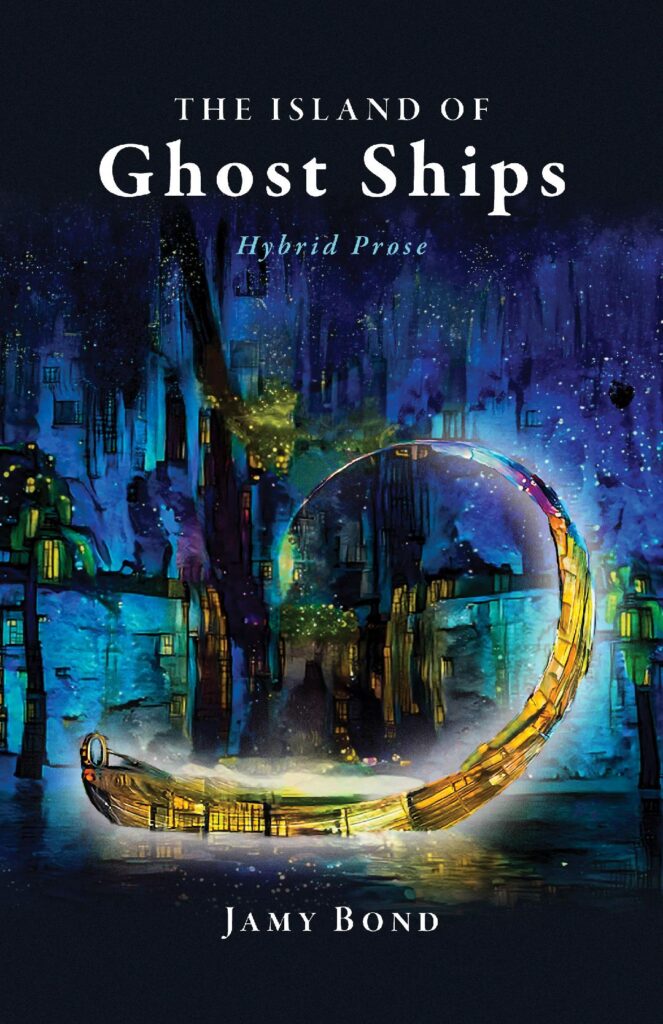
Interview with Jamy Bond

reprinted with permission from workinprogressinprogress.com

Give us your elevator pitch: what’s your book about in 2-3 sentences?  

After my sister, Shelby, is killed in a car crash while serving in the Peace Corps, I travel to Mozambique to locate her boyfriend, Idasse, who survived the crash. Together we retrace Shelby’s steps across a landscape of memory and loss. Part memoir, part investigative journey, The Island of Ghost Ships navigates the wreckage of grief through a series of short essays and a central haunting narrative.

Which essay did you most enjoy writing? Why?

Writing about grief is very cathartic for me; it’s a way of processing emotional pain, so I guess I felt that kind of enjoyment while writing every essay in this collection. “Your Broken Hands,” however, was the most difficult to write. It is a letter to my sister’s friend who fell asleep at the wheel. The car accident didn’t just kill my sister, it killed his father, too, and gravely injured his sister. I‘ve felt every emotion toward him from rage to compassion to forgiveness. I know it was devastating for him, and I often wonder how he carried on and where he is today. In that essay, I had to take all of these emotions and funnel them into just a few poignant words. That is the beauty and the challenge of the short form: how to convey enormous things through a single image, sentence, phrase, or word.

Tell us a bit about the highs and lows of your book’s road to publication. 

Oh gosh, where to start. I began this book about 20 years ago when I was awarded a Fulbright scholar grant to spend a year in Mozambique researching and writing about my sister’s death. Based on just a handful of pages, I ‘d signed with an agent, and she had a high-level editor at Knopf interested in the book. It was a lot of pressure. On top of the pressure, I was still drowning in grief over losing my sister and learning new details every day about the crash that killed her. Every sentence I wrote was painful. When I completed a page I’d get up and jump rope 100 times. I was in excellent shape by the end of it! The Knopf editor passed on the book. My agent sent it to dozens and dozens of publishing houses and they all passed. We’d get glowing letters about how wonderful the writing is, how moving the story, but in the end it was “too hard to sell.” I was devastated. I put the manuscript away for a long time. Then I pulled it out and started cutting huge chunks and reshaping what was left. I asked the amazing Meg Pokrass to help me expand it again, because I was still in this mindset that it had to be longer, but she said, “I think it’s beautiful as it is, just submit it,” So I did and a few months later Finishing Line Press accepted it.

What’s your favorite piece of writing advice?

It comes from Richard Bausch. Read your work out loud. It’s the single most important thing I’ve ever learned about writing. I do it a gazillion times with everything I write. It trains your ear to hear where even the smallest edit (a word, a comma, a period) will improve the clarity, refine the prose, and perfect the lyrical rhythm of your sentences. I do it so much that I can almost recite every one of my pieces from memory.

My favorite writing advice is “write until something surprises you.” What surprised you in the writing of this book?

There’s one piece, “Shipwrecked,” where time is compressed into a kaleidoscopic reality. I was surprised by how effective this technique can be at capturing both the feeling of my sister being gone forever, and the feeling I often have that she’s come back to me in form of my daughter. Time, of course, is a construct, and emotions know nothing about its passing, especially in the case of grief. Still, the details of an experience can blur and change and give way to new definitions: Here I am walking through a game park in South Africa with my sister, and here I am walking through a field of bluebells in Virginia with my daughter. There are 25 years between those two experiences and yet, they are happening simultaneously.  

How did you find the title of your book?

The book’s title, The Island of Ghost Ships, comes from something my sister said to me when we were visiting Catembe, which is an island in Maputo Bay off the coast of Mozambique. This was before they had built the suspension bridge that now connects the island to Maputo and we had to take a ferry to get there. As we pulled in to dock, we saw the wreckage of a ship and a few small boats in the sand. It was strange to see these abandoned pieces of history glistening there in the bright sun. We invented stories about where these boats had started their journey, who they carried, why they were left there to rot. And my sister said, “Welcome to the Island of Ghost Ships where even decay can be beautiful.”

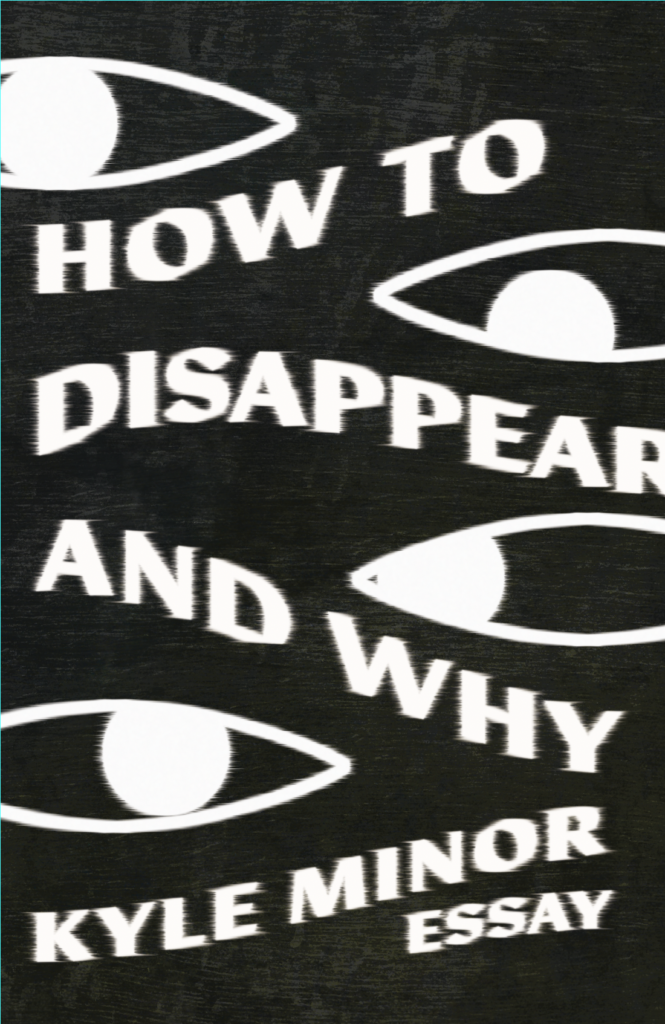
An Interview with Kyle Minor

reprinted with permission from www.workinprogressinprogress.com

Give us your elevator pitch: what’s your book about in 2-3 sentences?

These essays are interested in all varieties of disappearance: Voluntary, involuntary, coerced, professional, intellectual, transcendent, mortal. Ghosts of dead friends, driving Uber after Hollywood work dried up, narcissism in writers, social class and upward mobility, the Polish diplomat Jan Karski who failed to stop the Holocaust, folk art and synesthesia and transcendence, Bernard Moitessier and c. diff. and the sickness that might find its way into our song.

Which essay did you most enjoy writing? Why?

The real pleasure was writing “Junk Temples,” a novella-length essay-in-digressions toward the end of the book that is intensely interested in the notion of transcendence in art and the idea of how we make temples out of all kinds of things, including junk, and ascribe elevated meaning to them. I got to visit the folk artist Howard Finster’s Paradise Gardens, a couple of acres of his life’s work in junk collage and painting on everything, which is located right across the street from a state prison, and in a neighborhood full of Rottweilers chained to rickety stakes in every other front yard. And I got to spend time in the work of Henry Darger, who left behind one of the largest books ever assembled, which has at its center a phalanx of Charmin-girl angels with penises fighting a Civil War in some kind of troubled heaven. And I got to think about the nature of love and forgetting and music and books alongside Susan Sontag and William Goyen and a lot of poets, all through an overlay of synesthetic color and light.

 And which essay gave you the most trouble, and why?

The most difficult essay was the one at the end, “The Sickness and the Song,” which is an attempt at a personal reckoning with what art and writing are for, and how narcissism distorts, and what matters in life, even if you are chasing art. I was thinking about an around-the-world boat race in which the Frenchman Bernard Moitessier was in the lead, but he quit because the sailing—the water, the wind, the sky, the fish—had come to matter more than the race.

Tell us a bit about the highs and lows of your book’s road to publication.

I injured my brain a little playing hockey, and for a little while I had some trouble reading. Then I got sad. Then there were some complications with clearing permissions. The book was a little late to press. By then, the world had changed again, and it started to mean new things it hadn’t meant when I wrote it. Maybe it was for the best.

What’s your favorite piece of writing advice?

Quit this shit and go to medical school, so you can make enough money to eat.

My favorite writing advice is “write until something surprises you.” What surprised you in the writing of this book?

I think I might have found a path out of despair and into hope.

Who is your ideal reader?

You.

Interview with Serena Agusto-Cox

reprinted with permission from www.workinprogressinprogress.com

We don’t expect an elevator pitch from a poet, but can you tell us about your work in 2-3 sentences?

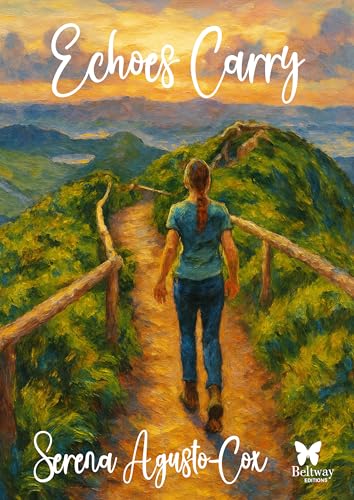
Echoes Carry is a collection throughout which familial and ancestral echoes weave through each poem in subtle and stark ways. It raises the question of how much we are influenced by our families and friends, including ancestors or distant relatives we’ve never met face-to-face. Tangentially, it seeks to understand the connections humans have with one another.

What boundaries did you break in the writing of this book? Where does that sort of courage come from?

I wouldn’t say I’ve broken any boundaries per se, but I wanted to create a collection that could speak to readers, not just academic readers. I wanted my audience to see the possibilities in their own lives and the connections they may have to family, friends, ancestors, without really knowing that their influence has been present since the beginning. It’s something I’ve thought a lot about. The human condition and where we get the impulse to choose one action or feeling over another and how much of that can be nature and how much can be nurtured. Even things that seem unique to us, like writing poems, can be something that our ancestors did before us, and we may never know. The possibilities are endless.

Tell us a bit about the highs and lows of your book’s road to publication.

The high is seeing a print copy in a box that you open at your house with your child videotaping the unboxing. Yes, I did this social media craze. Why? Because I want to share that joy, if not with the internet world, at least with my child. Definitely a fun moment: videotaping goofy mom. The lows are the length of time between when you’ve finally got the manuscript where you want it and you send it out over and over and over ad nauseum to places that reject it. You have to put your energy into another creative project or that process will depress you.

What’s your favorite piece of writing advice?

I think Billy Collins once said, “Write the poem only you can write.” That’s probably the best advice you can have with regard to poetry. But I’ve also taken Stephen King’s advice to heart about manuscripts. In On Writing, he mentioned that manuscripts should have a period of rest in a drawer. I believe he says six weeks, but sometimes, my poetry manuscripts have needed far longer than six weeks.

My favorite writing advice is “write until something surprises you.” What surprised you in the writing of this book?

It wasn’t the writing that surprised me or the collection of poems or the ordering of poems. What surprised me was the fun I had creating a book cover on Canva. Yes, I had help with the design, but the vision is all mine. I loved that creative part of the process. It was unexpected. Thinking about all the possibilities suggested by others and by the publisher, but knowing what I wanted to see and then being able to create it was the biggest surprise.

How did you find the title of your book?

The title of the book is a modification of a line in one of the poems. I’ll leave that mystery for readers to uncover.

Interview with Wendy J. Fox

reprinted with permission from www.workinprogressinprogress.com

Give us your elevator pitch: what’s your book about in 2-3 sentences?

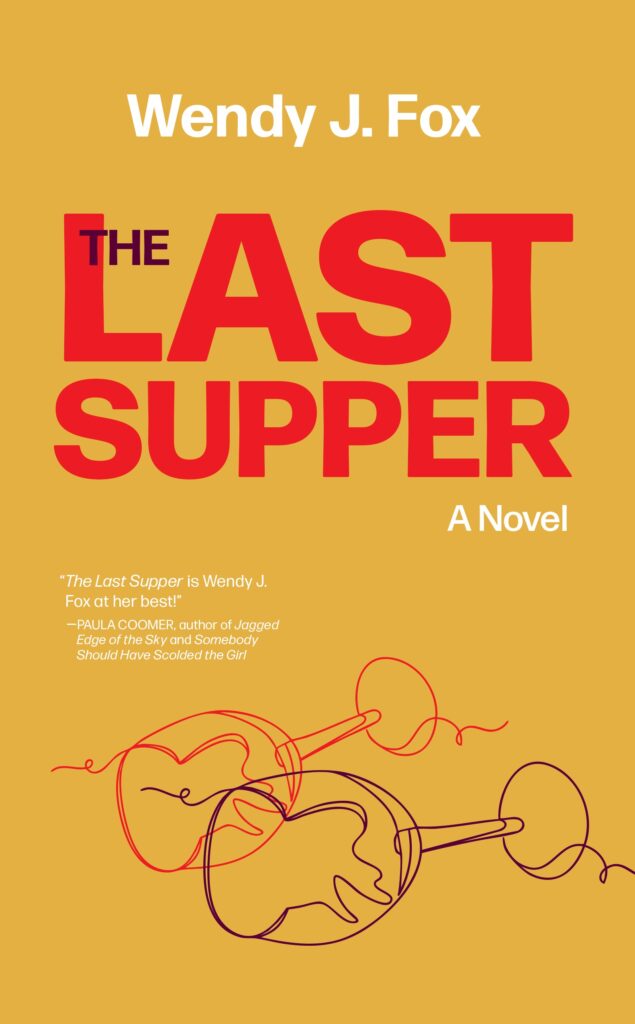
The Last Supper follows three months in the chaotic life of Amanda, who has just turned 40, has two young children, and is searching for something more in her life. She’s failed at being a momfluencer, she’s failed at MLM entrepreneurship, and she’s living in terror of what to make for dinner. Desperate for something more than the isolated world of her suburban home, but consumed by parenting, her illusory stability collapses when the cracks in her marriage finally split open so wide she sees a way out, and a pathway to reclaim her own creative and economic agency.

Which character did you most enjoy creating? Why? And which character gave you the most trouble, and why?

The character I most enjoyed creating was the mother in the novel—Camille is a successful attorney who specializes in family law and clawed her way into financial stability after being a single parent. The reason I felt energized when I was in her perspective is because she’s a successful woman who is not defined by caregiving relationships. She’s just who she is and doesn’t really care what other people think about her.

The character who gave me the most trouble—and I think this will track for other writers—was the protagonist, Amanda. She is the hinge the door of the novel hangs on, and it is from her perspective the plot unfolds.

With the most space and time with a protagonist, there’s also more chance for narrative discontinuity or character motivation issues to arise. She goes through a period of awaking in the novel, and while I think it is fair to say all writers of literary fiction or character-driven fiction want to represent the change that occurs, sometimes I have to work on not being didactic or too interior.

Still, from a process perspective, I enjoy the building of a character, inclusive of the hard parts. (This is why I don’t understand would-be creatives leaning on generative AI.)

If you can’t sit with your characters and really think about them, what’s the point?

While sure, it can be difficult, there’s also so much joy in figuring out a tricky sentence, so much satisfaction in revising a critical scene.

How I have come to think about AI chatbots (which you didn’t ask about but is on my mind all the time) is that chatbots are all output, in contrast to creative writing being largely about input.

Tell us a bit about the highs and lows of your book’s road to publication.

This is my fifth book, so at this point I can mostly roll with anything. That said, for me there is always the high of getting to contract with a manuscript, and the low of worrying about it.

The thing that has not changed at all—the thing I roll less well with is worrying how the book will be received.

I often say to people that I have this conundrum of: What if nobody reads it? And then: Oh crap, what if they do?!

Writing and publishing are just two different animals.

However, I do want to say to anyone out there shopping a manuscript: you might (will probably) at some point have a weird interaction with an agent, an editor, a publisher that will shake you. You might wake up in the middle of the night wondering if you wasted the last five years or more of your life.

It’s fine. Not every editor will get you. Lots of agents won’t. Do your work.

When you find the right publishing partner/model, you will know.

The lows are getting through the doubt. The highs are knowing you honored your work—whether it is published or not.

What’s your favorite piece of writing advice?

Over a decade ago, before I had a single book in print, I went to a panel where Andre Dubus III talked about the need for tension in every narrative.

That idea has crystallized over the years into really thinking about stakes.

On the panel, Dubus III said something like “If there’s no tension, who cares?” I think about that a lot.

My favorite writing advice is “write until something surprises you.” What surprised you in the writing of this book?

I love your writing advice.

What surprised me in writing The Last Supper was the way the manuscript changed over time. At first, I was writing from a character sketch, then I was developing in earnest. The beginning versions were very different, both in tone and plot.

But! That’s part of the whole point of the process. Which is also, again, why I can’t get down with AI, as there’s no process there.

How did you find the title of your book?

I am notoriously bad at titles.

Once, I turned in a book to my publisher called “Office Stories” – and talk about a snooze in the title department (thank goodness I was already under contract). And definitely no tension there, à la Dubus III. With some help, the title of the book became What If We Were Somewhere Else, which does have tension and also is appropriately descriptive of what it feels like to work in an office.

The title for The Last Supper came from a highly trusted reader.

I’m pretty transparent as a person and a writer, but my beta titles for what became The Last Supper are too embarrassingly bad for even me to share publicly.

Interview with Elizabeth Hazen

reprinted with permission from www.workinprogressinprogress.com

We don’t expect an elevator pitch from a poet, but can you tell us about your work in 2-3 sentences?

I tend to write my way through challenges – both internal ones and external ones – so a lot of my poems have to do with questions of identity and purpose as well as with navigating complicated relationships. My recent work also concerns parenting a young adult son, helping him find meaning in the world when I struggle to do so myself. I like to play with form, so a lot of my poems adhere to formal constraints of some kind.

Which poem/s did you most enjoy writing? Why?

I had a lot of fun writing the gloses. This is an obscure Spanish form that takes four lines – a “cabeza” – from an existing poem. Those lines then each become the final lines of four 10-line stanzas. Lines 6, 9, and 10 rhyme. In general, I enjoy working in form – it takes me out of my emotional brain and puts me in that logical, puzzle-solving brain. I think this is good for creating some distance from the subject, allowing me more objectivity. The form also encourages a dialogue with the poem from which the cabeza is taken, and I loved spending time with those works.

Tell us a bit about the highs and lows of your book’s road to publication.

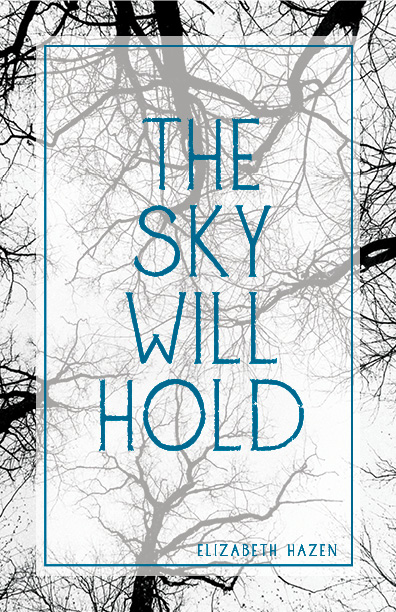
The publication process for The Sky Will Hold took longer than expected. Initially, Alan Squire Publishing was going to release this collection in March 2025. They published my first two collections and we were excited to work together on this one, but for various reasons in the spring of 2024, ASP decided to go on hiatus. I was disappointed and discouraged and spent a few months convinced that I would never find a publisher, but ultimately Riot in Your Throat took the book. The delay allowed me to add a few poems to the manuscript that I think make the collection stronger, so it all worked out in the end.

What’s your favorite piece of writing advice?

The older I get, the more I appreciate the advice that many of my teachers have given over the years – and that is simply to have fun with it. I’ve been writing for long enough that I see little reason to continue unless it brings me joy, so I have been trying to get back to that original sense of discovery and wonder that made writing appeal to me in the first place.

My favorite writing advice is “write until something surprises you.” What surprised you in the writing of this book?

I don’t think of myself as a very optimistic person, but I increasingly believe that my purpose in writing is to highlight the beauty and connection I see in the world. When I read through the collection, I am surprised and pleased to see that many of the poems are actually pretty hopeful.

How did you find the title of your book?

Rose Solari, a fabulous poet and teacher and the publisher of my first two books, came up with the title. She was helping me with the order of the poems, and we were chatting about title options, and she suggested The Sky Will Hold. The more I thought about it, the more I felt that it was the right title.

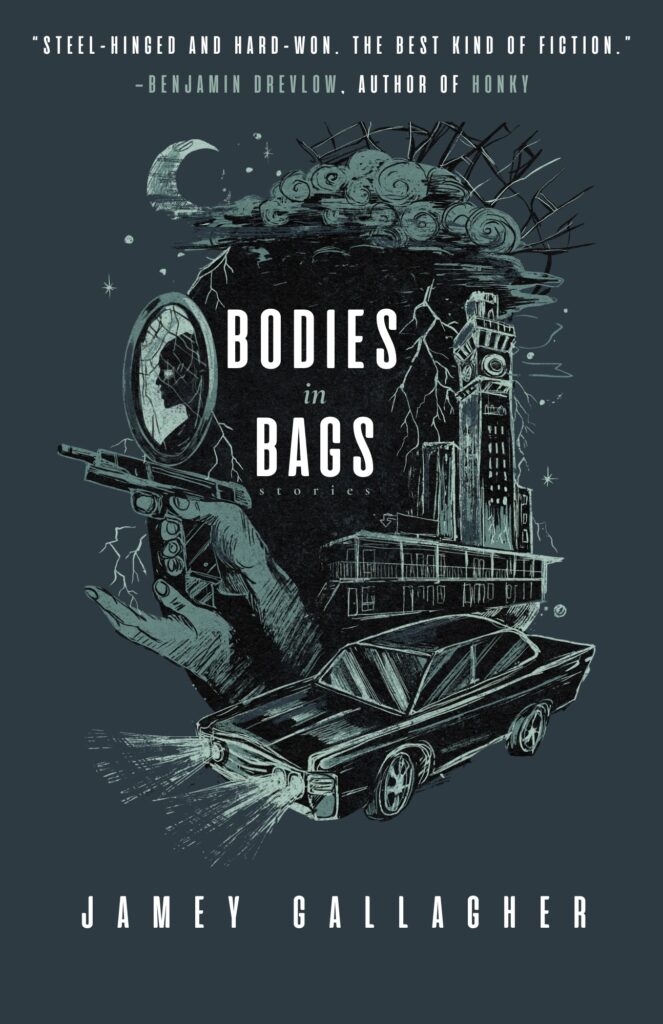
Interview with Jamey Gallagher

reprinted with permission from www.workinprogressinprogress.com


Give us your elevator pitch: what’s your book about in 2-3 sentences?

 Bodies in Bags is a grit lit/crime collection so visceral you can smell it. A bad cop in New Hampshire dealing with the consequences of shooting an intruder, a drifter who wakes up next to her dead companion in Atlantic City, a veteran fleeing to South Jersey after an impulsive crime: these are stories of desperation and recompense, told in tough and sometimes tender voices. The stories deal with issues of masculinity, consequences, violence, and uncontrollable impulses.

 Which story did you most enjoy writing? Why? And which story gave you the most trouble, and why?

Of all the stories in Bodies in Bags, I think “Night Moves” might have been the most enjoyable to write. The setting takes me back to a volunteer position at a hospital I had when I was a teenager. The world feels familiar, and the main character is someone I like a lot, a woman like some of the women I worked with at the hospital: tough but kind. The story “Dream a Little Dream” probably gave me the most trouble. It took me so long to finish. I had the character and the opening scene for years, and I must have started three or four novels based on that opening before finally coming up with a shape and a voice that I’m proud of.

 Tell us a bit about the highs and lows of your book’s road to publication.

This is the second book of short stories I’ve published in two years. For both books, many of the stories go back a ways. Once I had found the shape for my first collection, I realized that I had a bunch of noir/grit lit pieces that all seemed to hang together. After years of facing rejection, this book was pretty easy to get out there, thanks to the support and faith of Ross Tangedal at Cornerstone Press.

What’s your favorite piece of writing advice?

I tend to think all writing advice is pointless, unless it works. As a young writer, I was lucky enough to be in a writing group run by Andre Dubus III. Many things Andre said stuck with me, but I particularly remember him talking about perseverance. “If you put it under a magnifying glass long enough, eventually it’s going to catch fire.”

My favorite writing advice is “write until something surprises you.” What surprised you in the writing of this book?

The best stories are almost entirely surprises. As a writer, especially when I’m between stories, I’m always listening for voices and waiting to hear one that works. This collection features a lot of voices that surprised me. I have no idea why they feel real to me or where they came from.

What’s something about your book that you want readers to know?

I think readers should know what they’re getting into. This book is definitely not for everyone, but, for people who like things dark, I think it will provide exactly what you’re looking for. It doesn’t flinch.