We’re Eager to Read Your Work!
[reprinted with permission from Work-in-Progress, a literary blog: www.workinprogressinprogress.com]
We don’t expect an elevator pitch from a poet, but can you tell us about your work in 2-3 sentences?
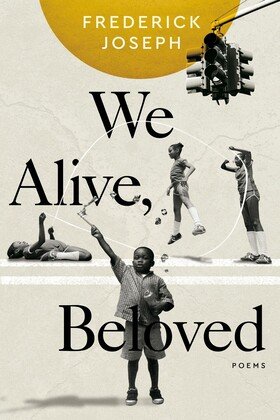
I consider myself a storyteller above all else, weaving tales of resilience and hope from the heart of Yonkers to the shelves of the world. My words live across genres, from poetry’s intimate embrace in “We Alive, Beloved” to the calls for justice and understanding in “Patriarchy Blues” and “The Black Friend.” Each sentence I write is meant to help us all become a bit freer, whether that’s in the body, mind, or soul.
Which poem/s did you most enjoy writing? Why? And, which poem/s gave you the most trouble, and why?
I most enjoyed writing many of the poems in “We Alive, Beloved” because each one allowed me to explore different facets of the Black experience and celebrate resilience, joy, and love. However, the poem that gave me the most trouble was “The Odyssey.” This poem is very personal, reflecting on a Black life from birth onward. It attempts to be speculative while also playing on some of the prose found in Homer’s “Odyssey” and other epic poems. Balancing these elements and doing justice to such a profound subject made it a challenging piece to write.
Tell us a bit about the highs and lows of your book’s road to publication.
The journey of bringing “We Alive, Beloved” to life has been filled with highs and lows. One of the lows is that, as I write this, the collection is delayed a week due to printing logistics. Additionally, getting more people to engage with poetry, especially those who are more familiar with my essays and fiction, has been a mountain to climb. Still, the joy of seeing my poetic expressions take shape and the anticipation of sharing these deeply personal pieces with the world.
What’s your favorite piece of writing advice?
As a writer, the advice I can offer is to embrace the power of your authentic voice. Write from the depths of your soul, unfiltered and unapologetic. Authenticity resonates; it has the power to move mountains and touch hearts. Don’t shy away from the raw, the real, and the vulnerable. Let your words reflect the truth of your experiences, the richness of your heritage, and the unique perspective only you can bring.
My favorite writing advice is “write until something surprises you.” What surprised you in the writing of this book?
What surprised me, deeply and profoundly, was how much certain moments from my past still sit with me. Writing this book unearthed memories long buried, reminding me that our past is never truly behind us; it sits in the marrow of who we are and what we create.
What’s something about your book that you want readers to know?
I want readers to know that I cried after finishing most of the poems in the collection. Each verse is a reflection of our shared struggles, our triumphs, and the silent battles fought in the depths of our souls. Those tears weren’t just mine; they belong to the history, the present, and the future of a people who continue to rise.
Inquiring foodies and hungry book clubs want to know: Any food/s associated with your book?
I love that question! This book is so tied to my grandmother that I would have to say the book reads best with a slice of sweet potato pie. Which was her specialty.
*****
READ MORE ABOUT THIS AUTHOR: www.frederickjoseph.com
ORDER THIS BOOK FOR YOUR TBR STACK: https://www.simonandschuster.com/books/We-Alive-Beloved/Frederick-Joseph/9781955905640
South 85 Journal is honored to announce the winners of the 2023 Julia Peterkin Flash Fiction and Poetry Literary Award winners:
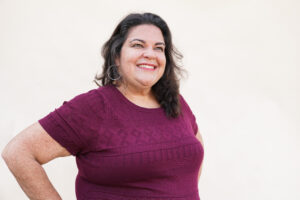 Winning story: “As To Your Comment That It Could Have Been Worse” by Caridad Moro-Gronlier.
Moro-Gronlier is the author of Tortillera (TRP 2021), winner of The TRP Southern Poetry Breakthrough Series and the chapbook Visionware (FLP 2009). She is a Contributing Editor for Grabbed: Poets and Writers Respond to Sexual Assault (Beacon Press, 2020) and Associate Editor for SWWIM Every Day an online daily poetry journal.
Judge’s comments: This piece is both technically sophisticated and emotionally resonant. The author creates an inner rhythm with spare, lyric language and the repetition of the word “worse.” Then, as the story progresses, the unfolding events become progressively worse. What begins as a bad date becomes a violent assault. The narrator’s revelation at the end saddens me, but also enlightens me. The narrator feels anger after 30 years, yet she directs that anger at herself. This surprised me at first, but it reinforces the guilt and self-blame that victims of sexual assault never truly get over. The narrator turns the blame and anger inward, as if sparing the reader of her feelings, which makes me feel even more for the narrator. She’s spent her whole adult life sparing others of the feelings she’s kept bottled up, and that is the saddest repercussion of all.
~ Susan Tekulve, Flash Fiction Judge
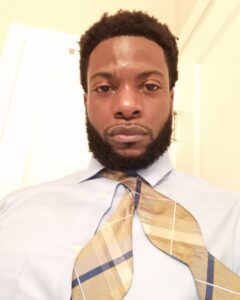 Winning Poem: “A Black Poet Looks Back at his Boyhood” by Oak Morse.
Morse lives in Houston, Texas, where he teaches creative writing and theater and leads a youth poetry troop, the Phoenix Fire-Spitters. He was the winner of the 2017 Magpie Award for Poetry in Pulp Literature, a Finalist for the 2023 Honeybee Poetry Award and a Semi-Finalist for the 2020 Pablo Neruda Prize for Poetry. A Warren Wilson MFA graduate, Oak has received Pushcart Prize nominations, fellowships from Brooklyn Poets, Twelve Literary Arts, Cave Canem’s Starshine and Clay as well as a Stars in the Classroom honor from the Houston Texans. His work appears in Black Warrior Review, Obsidian, Tupelo, Beltway Poetry Quarterly, Nimrod, Terrain.org, Hampden-Sydney Poetry Review, among others.
Judge’s Comments: This poem proves the immense power of plain language honed and polished, built for conveying complexity and nuance. This well-sustained narrative of the teacher’s past and students’ present pleases both ear and brain, not to mention the heart. This is a love poem to, somehow, every person in it.”
~ Suzanne Cleary, Poetry Judge
The winning selections for this year’s contest will be published in the winter issue of South 85 Journal published in mid-December.
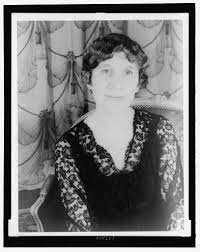
S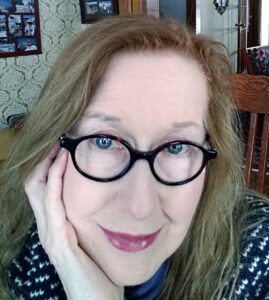 uzanne Cleary’s Crude Angel, her fourth full-length poetry collection, was published in November 2018 by BkMk Press (U of Missouri-Kansas City). Beauty Mark (BkMk 2013) won the John Ciardi Prize for Poetry, and also received the Eugene Paul Nassar Poetry Prize and the Patterson Award for Literary Excellence. Keeping Time (2002) and Trick Pear (2007) were published by Carnegie Mellon University Press. Poets Marilyn Nelson and Robert Cording selected her collection Blue Cloth as winner of the 2004 Sunken Garden Poetry Festival chapbook competition.
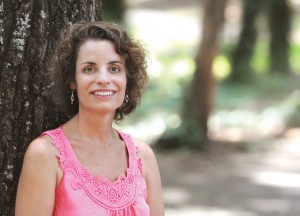 Susan Tekulve is author of Second Shift: Essays and In the Garden of Stone, winner of the 2012 South Carolina First Novel Prize and a 2014 Gold IPPY Award. She’s also published a short story collection, Savage Pilgrims, and two fiction chapbooks, Washday and My Mother’s War Stories. Her work appears in Denver Quarterly, Indiana Review, The Georgia Review, Connecticut Review, The Louisville Review, Puerto del Sol, New Letters, and Shenandoah.

Linda Briskin is a writer and photographer. She is intrigued by the permeability between the remembered and the imagined, and the ambiguities in what we choose to see. The fluidity between the natural and the constructed fascinates her. Her focus, then, is on inventing images rather than capturing them. Her photographs have been exhibited and published widely. https://www.lindabriskinphotography.com/


South 85 Journal is pleased to announce the nomination for the following works, which appear in the Summer 2022 issue, for this year’s Best of the Net Anthology.
The Best of the Net is an awards-based anthology designed to grant a platform to a diverse and growing collection of writers and publishers who are building an online literary landscape that seeks to break free of traditional publishing. This space has been created to bring greater respect to the continually expanding world of exceptional digital publishing.
Drenched by Emily Fontenot
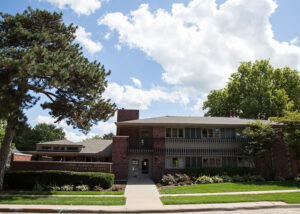
South 85 Journal is happy to present the first in a series of interviews featuring directors and administrators of various writing residencies to give our readers a peek into how these programs are organized and facilitated. Or first interview is with Holly McAdams Olson who is the current director of the Kimmel Harding Nelson Artist Residency in Nebraska City, Nebraska, and welcomes both visual artists and writers. Their twice yearly application deadlines are March 1 and September 1. You can apply here.
Tell us a little about the origins of the Kimmel Harding Nelson Artist Residency.
The Kimmel Harding Nelson Center for the Arts is a program of the Richard P Kimmel and Laurine Kimmel Charitable Foundation. Laurine Kimmel was a well-known watercolor artist from Nebraska City. The residency program continues her and her husband Richard’s legacy of supporting the arts in Southeast Nebraska.
KHN is located in a unique Prairie-style residential complex built in 1969 by another established Nebraska City couple, Peg and Karl Nelson. Mrs. Nelson’s maiden name was Harding, and the complex was built on the site of a past Harding home. In honoring this history, the program was named the Kimmel Harding Nelson Center for the Arts and opened as an artist residency program in 2001.
What makes the KHN residency distinct from others?
KHN is known for its serenely quiet and homey feel. Just as the Nelsons designed the multi-unit luxury home to facilitate both independent living and ease of socializing, the facility’s architecture provides a superb layout and an intimately spacious setting for a small-cohort artist residency program. The facilities support up to five residents, generally in the mix of two visual artists, two writers, and one composer.
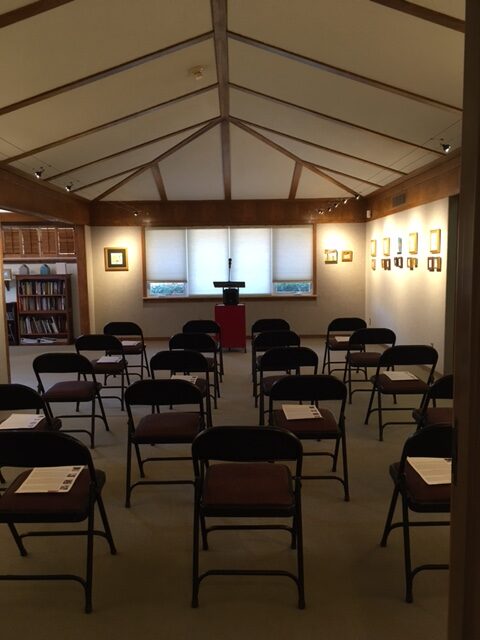
Residency program models are as varied as their facilities and locations. While some programs are known for their chef-prepared meals and daily networking opportunities, KHN provides uninterrupted time and minimal obligations so that each individual can deep-dive into their own rhythms of work and exploration.
Nebraska City is a vibrant rural town with just over 7,000 people. As the home of Arbor Day, the town’s tree-lined brick streets, small museums, local shops, and sprawling parks provide many opportunities for residents to explore local attractions without the burden of too many events and “places to be” to detract their focus from their creative work.
What is your role in the organization today?
I have been the Program Director since 2017. I oversee all aspects of the residency program, our regional exhibition program, and the Kimmel Permanent Collection, which comprises over 250 visual artworks, 200 literary works, and 75 musical works (albums or scores) donated to the center by former residents.
What do you find most rewarding about your work with KHN?
I had fallen into grant writing and development work before coming to KHN five years ago. I often joke that after years of building case statements for why people should want to support, talk to, and listen to artists, now, I just get to. Taking part in boundless cross-disciplinary conversations between visual artists, writers, and composers is the most rewarding part of my job. As much as I love art of all varieties, even more, I love hearing artists talk about what they do and why. Considerations such as composition, design, and character development, as well as the hustle and logistics of piecing together a career, are both unique and universal for all media and disciplines. I just love the “aha” moments for myself and others when one individual’s work or process spurs someone of a different discipline to say, “huh, I never thought of it that way before. Say more”.
What about the residency most surprises writers who attend?
KHN is their first experience in Nebraska or the Midwest for many of our residents. Most report that the residency, our facilities, and their experiences with the local community exceed their expectations. For writers especially, we repeatedly hear that although time went faster than they had expected, their productivity exceeded their goals. In hindsight, many resident writers have stated that each week at KHN seemed the equivalent of a month’s worth of productivity in their daily lives.
When and how do writers and artists apply?
We host two application cycles each year: March 1st and September 1st. The March deadline determines awards for the second half of the current year (July – December), and the September deadline determines the first half of the following year (January – June). All applications must be submitted through our online application portal (via Slideroom), and there is a $35 fee to apply. Writers submit up to 10 poems totaling no more than 30 pages, or two stories, essays, or book chapters totaling no more than 7,500 words; a résumé; two artist statements; and contact information for two references. Additional guidelines can be found on our website (https://www.khncenterforthearts.org/residency/how-apply). Writing applications are always our largest pool of applications. We generally receive about 100-120 writing applications each deadline and award approximately fifteen, two- to eight-week writing residencies each session.
What makes you laugh?
My husband would tell you that I do. I have an extremely dry and punny sense of humor, so often, other people in the room only awkwardly laugh because I am laughing. Or they just roll their eyes.
~
Holly McAdams Olson joined KHN as Director in February 2017. She holds a BFA in Ceramics from the University of Nebraska at Omaha, as well as a BA in Arts Management and a Master of Business Administration from Bellevue University. Prior to joining KHN, Holly established her love for supporting artists and cultivating the Arts in Omaha, working at The Union for Contemporary Art, the Bemis Center for Contemporary Arts, and as a former board member of WhyArts? Inc. Holly lives in Union, Nebraska.
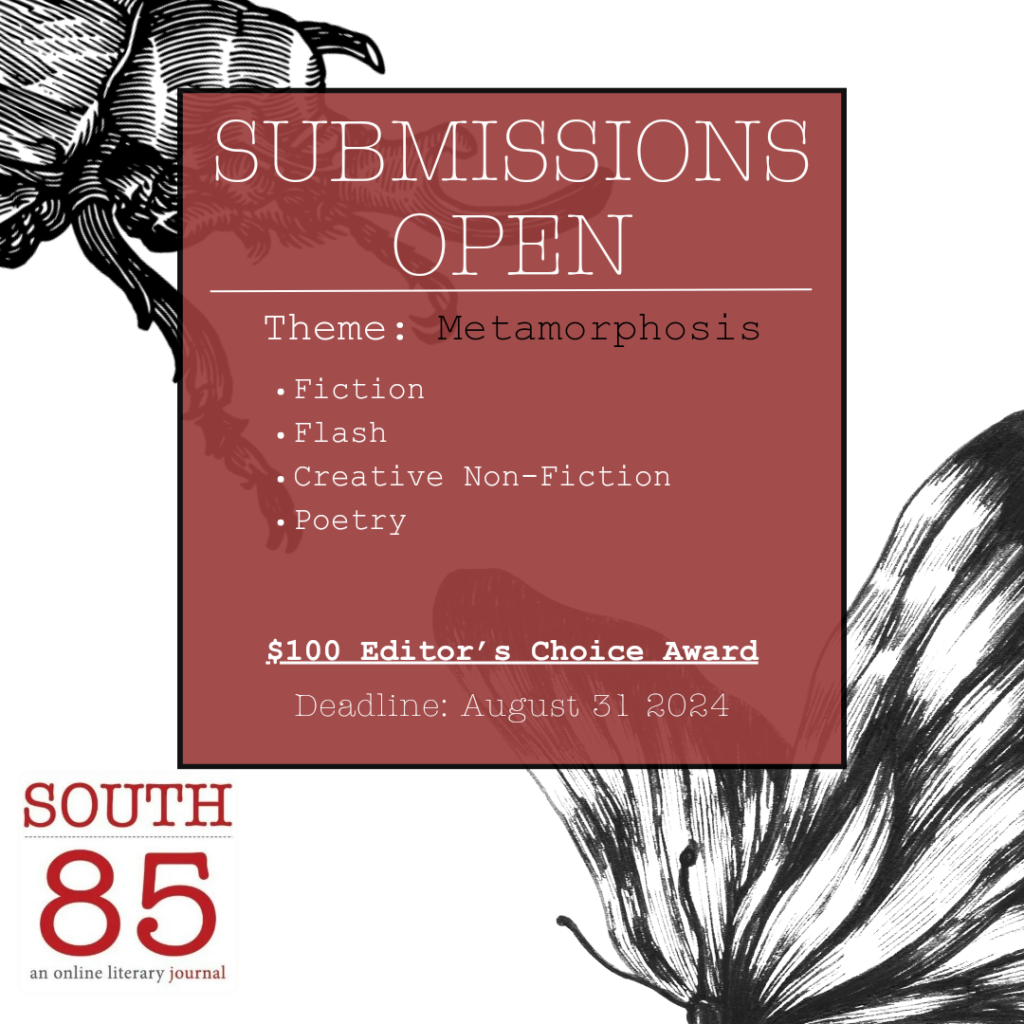
Submissions are now open for the Julia Peterkin Literary Awards in Flash Fiction and Poetry.
Established in 1998 by the Creative Writing program at Converse College, the Julia Peterkin Award is a national contest honoring both emerging and established writers. The award is named for Converse graduate Julia Mood Peterkin, whose 1929 novel, Scarlet Sister Mary, was awarded the Pulitzer Prize in literature.
South 85 Journal seeks submissions of unpublished flash fiction of 850 words or fewer and previously unpublished poems of 50 lines or fewer. We are especially interested in stories and poems that demonstrate a strong voice and/or a sense of place, but consider all quality writing.
The winning selection in each category will be awarded $500 and publication in the December issue of South 85 Journal. Contest finalists will also be selected and published alongside the winning selection. Submissions are read blind by an outside judge.
Judges for this year’s contest are Cary Holladay for flash fiction and Ashley M. Jones for poetry.
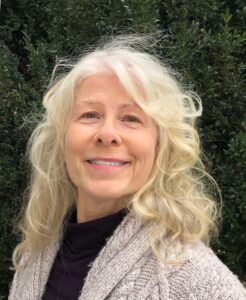
Cary Holladay has published six short story collections, including Horse People, The Quick-Change Artist, and most recently, Brides in the Sky, as well as two novels and over 100 short stories and essays in journals and anthologies, including Alaska Quarterly Review, Arkansas Review, Five Points, The Georgia Review, The Hudson Review, Kenyon Review, Prairie Schooner, Sewanee Review, Southern Review, and Tin House. Her awards include an O. Henry Prize and a fellowship from the National Endowment for the Arts. She is Professor Emeritus at the University of Memphis. She lives in Virginia.
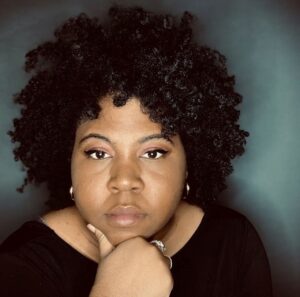
Ashley M. Jones is Poet Laureate of the state of Alabama (2022-2026). She received an MFA in Poetry from Florida International University (FIU), where she was a John S. and James L. Knight Foundation Fellow. She is the author of three poetry collections: REPARATIONS NOW! (Hub City Press, 2021); dark // thing (Pleiades Press, 2019), winner of the Lena-Miles Wever Todd Prize for Poetry; and Magic City Gospel (Hub City Press, 2017), winner of the silver medal in poetry in the Independent Publishers Book Awards. Her poems and essays appear or are forthcoming in many journals and anthologies, including CNN, the Academy of American Poets, Poetry magazine, Tupelo Quarterly, Prelude, and The Harvard Journal of African American Public Policy, among others.